Showing posts with label sacred spring. Show all posts

Tuesday, 19 August 2025

Water Dowsing at Wellcome's Thirst Exhibition

I'm currently writing a a book on dowsing for Moon Books' Pagan Portals series, so naturally I was interested to see displays of dowsing rods at Thirst: In Search of Freshwater, an exhibition at London's Wellcome Collection. 

I took the photos above and below. The one at the top shows a 1709 French book called La physique occulte ou traite de la baguette divinatoier (Occult Physics, or Treatise on the Divining Rod) by Pierre Le Lorrain, of the Abbe de vallemont. alongside it are two V finger rods and two forked-twig rods. The description by these reads: 

Pierre Le Lorrain's 1709 book, Occult Physics, or Treatise on the divining rod, reflects the integration of occult practices with scientific investigation on the 17th and 18th centuries. Dowsing involves holding two rods or a forked stick (known as a dowsing or divining rod) believed to move spontaneously when passed over a hidden water source, minerals or treasure. This book served as a guide for practitioners and the curious alike, offering theories about the physics behind dowsing and instructions on the use of the rods.

Dowsing has been passed down through generations. Dowsing rods are still used today by some communities who live and work closely with the land across Europe.

Another display shows a 19th century picture of Saint Gangulphus (left), who became associated with divination. However, his story isn't a particularly pleasant one. The description says:
The French saint Gangulphus is shown here striking the ground with his staff, bringing forth a miraculous spring. According to Christian legendshe miraculously moved this water source to the grounds of his home from a property he had bought miles away. Suspecting his wife's infidelity he instructed her to put her hand into the spring. It scalded her, revealing her guilt. She had her lover then murdered Gangulphus. Following his death in 760, he was venerated across Europe as a 'well saint'. He became associated with the practice of divination, with people seeking his help to find water sources.

Thirst: In Search of Freshwater earlier is on until  February 2026 at the Wellcome Collection, 183 Euston Road, London NW1 2BE. Entry is free and you can just turn up to see it. https://wellcomecollection.org/exhibitions/thirst-in-search-of-freshwater

Tuesday, 22 April 2025

Green London: The Rookery & Streatham Common

You might be forgiven for thinking The Rookery is somewhere birds roost, or perhaps a part of Dickensian London infamous as a hive of scum and villainy. Well, the word can mean either of those things, of course, but The Rookery nestled within by Streatham Common is a Grade II Listed Historic Garden. It has bubbling streams leading to ornamental ponds, beds of herbaceous plants and wildflower, an orchard, and a community garden. 

It gets its name because it was originally the landscaped gardens of a large house called ‘The Rookery’ - which sounds delightfully Gothic to me. I'm sure it was full of ghosts, secret passages, maybe a family curse, and flocks of black corvids croaking ill-omens, but that's probably just my imagination. I don't know much about the history of the building except that it housed guests staying in the area to use the health-giving springs and spas Streatham was once famous for. You can still see one of the three original wells of Streatham Spa Water, dating from 1609.

In the early years of the 20th century, the site was going to be sold for redevelopment, but was saved by public subscription and the whole area beautifully planted and landscaped, opening to the public in 1913. It includes a traditional Old English Garden, and a White Garden in which only pale flowers bloom. The Rookery is also rich in wildlife. Part of it was declared a Local Nature Reserve in 2013, along with Streatham Common. 

It's managed by Streatham Common Cooperative (SCCoop), a local community-led enterprise. A market takes place there every Saturday. Public toilets and a café can be found just outside, as well as a lovely paddling pool I remember enjoying in my childhood. When I visited over the bank holiday there was a dog splash day and I watched pooches happily running about in the water and wagging their tails. 

Streatham Common

Once part of the Great North Wood, ancient woodland which stretched across the land south of London, Streatham Common was saved from redevelopment in 1884 for the public to continue to enjoy. It's still a large area of open green space containing woodland, grassland, meadows, streams and a picnic area, as well as surrounding The Rookery formal garden.

The Common is a key site within London Wildlife Trust’s 'Great North Wood' project, which aims to raise awareness of the original Great North Wood, offering guided walks, talks and and volunteering activities. Both Streatham Common and the Rookery are designated Sites of Importance for Nature Conservation for the London Borough of Lambeth. 

Green London

I've been blogging regularly about London's green spaces in an effort to dispel a prevalent myth in the pagan community that it's just all concrete. Even in the City, which is of course heavily built up, there are still places where nature thrives, while Greater London has huge areas of woods, commons, parks and beautiful gardens.

The pictures on this post were all taken by me. Please do not use them without my permission.

Previous Green London Posts
http://www.badwitch.co.uk/2025/03/green-london-plumstead-common-its.html
http://www.badwitch.co.uk/2025/03/green-london-londons-first-botanical.html
http://www.badwitch.co.uk/2025/03/green-london-japanese-gardens-in.html
http://www.badwitch.co.uk/2023/09/green-london-riverview-walk-river-pool.html
http://www.badwitch.co.uk/2023/10/green-london-ancient-woodlands-around.html

Monday, 10 March 2025

Historic Spring & Yew Tree in Tunbridge Wells


Tunbridge Wells, in Kent, is famous for it chalybeate springs, the water from which was fashionably drunk for health-giving properties in the 18th and 19th centuries. The best known spring can still be seen at the Pantiles in the town, but another can be found at nearby Dunorlan Park. 

I went to the park for a picnic and a walk in the warm, sunny weather last Saturday. While I was there I video'd the iron-rich water bubbling to the surface. An ancient yew tree stands on the grassy bank above it, which you can see in the photo below. 

Water from the spring feeds a small stream that feeds a lake in the centre of the park. Dunorlan was once the private grounds of a Victorian mansion. The building is no longer there. The grounds are now a public park, but are still laid out much as they were in the 19th century.  If you want to find out more about the park, here's a link: https://tunbridgewells.gov.uk/community-and-leisure/parks-and-play-areas/dunorlan-park

However, the spring was there long before the Victorian mansion. From what I can gather it was once called Burnt House spring. Descriptive Sketches of Tunbridge Wells and the Calverley Estate, published in 1816, described it as a "romantic spot" and also mentioned the wide brick basin that still exists. 


Previous related posts
http://www.badwitch.co.uk/2023/07/pagan-eye-sacred-spring-on-sussex-beach.html

Friday, 6 September 2024

Review: Pagan Portals - Sulis by Rachel Patterson

Rachel Patterson is one of the top pagan writers on English goddesses, covering scholarly research and her perspective as a practicing high priestess and witch. Her latest book is on Sulis, whose name is found at the hot springs in Bath, and who is associated with spring waters and solar energy.

This new pagan portals title is in two parts. In the first bit, Rachel examines the history and evidence for a goddess who was clearly important in the past. The second part is about working with Sulis. Rachel covers personal insights, appropriate things to put on altars, rituals, magic, and recipes to serve at feasts in honour of the goddess.

"Sulis is one of the very ancient English goddesses. From evidence found we know that she was worshipped at the hot springs in Bath, in the UK, going back to at least the Mesolithic period. What we know about her can only be gleaned from the archaeological finds at the Roman Baths in Bath and a few mentions in ancient Roman documents. What we do know is that she must have been extremely powerful, and her presence continues to carry that energy forward. The historical information in this book is drawn from archaeological finds and academic viewpoints from experts in their field. Little or nothing is known or has been found about the goddess herself, or how she was honoured. Drawing upon personal experience, this book gives you an introduction to connect with Sulis yourself and discover and create your own relationship with her."

I really enjoyed reading an advance copy of Pagan Portals - Sulis, not only because it contains a useful information and practical suggestions, but also because Rachel has a great writing style. 

Free launch event

On Saturday 7 September Rachel Patterson is offering a free online workshop, talk, and ritual for Pagan Portals - Sulis. It will be streamed live to https://www.facebook.com/RachelPattersonbooks and https://www.facebook.com/kitchenwitchuk

About the author

Rachel is an English witch who has been walking the Pagan pathway for over thirty years. She has had over 25 books published, some of them becoming best sellers. High Priestess of the Kitchen Witch Coven and an Elder at the online Kitchen Witch School of Natural Witchcraft, she gives talks to pagan groups and co-runs open rituals and workshops run by the Kitchen Witch Coven.

You can view Pagan Portals - Sulis at publisher Moon Books and on Amazon. The official publication date is 24 September.

(Please note I earn commission from some links)

Previous related posts
http://www.badwitch.co.uk/2019/06/review-pagan-portals-sun-magic-by.html
http://www.badwitch.co.uk/2013/05/review-grimoire-of-kitchen-witch.html
http://www.badwitch.co.uk/2013/09/pagan-eye-roman-goddess-luna-at-bath.html
http://www.badwitch.co.uk/2014/12/pagan-eye-three-celtic-goddesses.html

Thursday, 20 July 2023

Pagan Eye: A Sacred Spring on a Sussex Beach

If you Google "Holywell Eastbourne", you'll probably find details of a nice beach at the end of the Sussex seaside town's Western Parade. There's an excellent a cafe, public toilets, some chalets and a path leading up the cliff to pleasant gardens. It's a nice place, but you won't find an actual well there. To see the holy well I've photographed above, you need to go further along the cliff top and then down a very narrow path and steep steps. It's one of the area's hidden gems.

Technically, it isn't a well. It's a freshwater spring that emerges from the side of the cliff and forms a beautiful pool on the beach. The site feels sacred and there's plenty of evidence people go there to remember lost loved ones. Painted stones have been left beside the pool with names and poignant messages. Leaving things at sacred sites is a controversial subject. Personally I don't leave anything except footprints and I don't take anything except photos and a tiny bit of water if permitted.  I've blogged in the past about what not to do at holy sites

However, it was good to see no one had left plastic tat. As I'm sure everyone who reads my blog is aware, people should always take all their own stuff home with them and if possible also try to clear up any other litter they see lying about.

On each Pagan Eye post, I show a photo that I find interesting, with a few words about it. I'm not quite sure what I'll be including - it could be a seasonal image, a pagan site, an event, or just a pretty picture. If you want to send me a photo for a Pagan Eye post, please email it to badwitch1234@gmail.com Let me know what the photo shows and whether you want your name mentioned or not. For copyright reasons, the photo must be one you have taken yourself and you must confirm that you are submitting it for A Bad Witch's Blog.

Other previous related posts
http://www.badwitch.co.uk/2021/12/sacred-sites-st-cedds-well-north.html
http://www.badwitch.co.uk/2022/11/pagan-eye-spring-of-dionysus-at-dion-in.html
http://www.badwitch.co.uk/2023/05/pagan-eye-beltane-fire-ceremony-at.html
http://www.badwitch.co.uk/2023/05/walking-art-of-tides-stones-god-of-sea.html

Tuesday, 28 December 2021

Sacred Sites: St Cedd’s Well North Ockenden

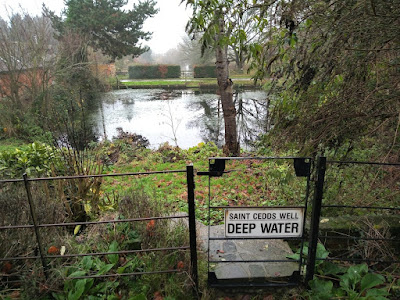
Even on a grey and misty day in the middle of winter, St Cedd’s Well feels as though it has calming and healing energy. I visited the well, in the grounds of St Mary Magdalene Church North Ockendon, Essex, on the way to seeing relatives on Boxing Day. 

I'd been looking at my list of resolutions for the year and saw one I hadn't done yet was to visit a sacred site outside London that I hadn't been to before. Looking at the Megalithic Portal website, I spotted St Cedd’s Well as being a short detour from my route. I'm glad I went there as it is a lovely, peaceful place.

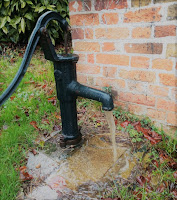
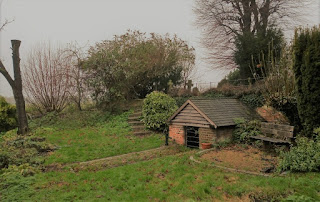
Steps lead down from a clearly marked gate in the churchyard to the well, which is housed in a brick surround with a wooden roof. A hand-driven pump at the side lets you draw water from it, and a channel from the well runs down into a small lake. You can also sit on a bench to once side and enjoy a rest and quiet contemplation. I have no idea if the water is drinkable. I won't be trying that, but I will be using the water for scrying on New Year's Eve. 

The well gets its name from a Christian missionary who, according to legend, converted East Saxons to Christianity after 633AD. It's said he used the waters for baptism. However, it's also possible that the well was also considered sacred by pagans before that time. 

A more grisly fact of history is mentioned in an article in the Romford Recorder, that William the Conqueror issued a grant for St Mary Magdalene Church to be a “church in which the examination of the judgement of fire and water is held by ancient custom”. Judgement of water was one test used on people suspected of witchcraft. If you sank you were innocent, but if you floated you were guilty. Thankfully there's no records showing this was actually done at St Cedd's Well, just that it could have been.

I later discovered that I hadn't achieved my goal of visiting a sacred site outside the capital, as North Ockendon is actually the easternmost and most outlying bit of Greater London. Still, it seems very much a country area and I'm very pleased I paid a visit. 

Previous related posts
http://www.badwitch.co.uk/2015/07/sacred-sites-queen-annes-holy-well-at.html
http://www.badwitch.co.uk/2013/08/lullingstone-roman-villa-sacred-well.html
http://www.badwitch.co.uk/2008/06/in-search-of-sacred-spring.html
http://www.badwitch.co.uk/2012/10/london-necropolis-st-brides-church-of.html

Thursday, 22 August 2019

Pagan Eye: Willow Tree in Sydenham Wells Park


This wonderful picture of a willow tree was sent to me by Nathalie Andrews, who said it is in Sydenham Wells Park, in south-east London. She described it as "absolutely stunning", and I agree.

Wells Park gets its named after springs that were found in Sydenham in the 17th century. The springs were said to be medicinal and attracted crowds of people to the area, for their health-giving properties. Some of the springs are still active, though mainly below ground.

Nowadays the park contains a sensory garden, planted to stimulate all the five senses. The garden has a water feature that uses recycled water and is powered by solar energy, symbolising the underground springs. A perfect place to visit over the Bank Holiday weekend if you are in the area.

On each Pagan Eye post, I show a photo that I find interesting, with a few words about it. I'm not quite sure what I'll be including - it could be a seasonal image, a pagan site, an event, or just a pretty picture.

If you want to send me a photo for a Pagan Eye post, please email it to badwitch1234@gmail.com Let me know what the photo shows and whether you want your name mentioned or not. For copyright reasons, the photo must be one you have taken yourself and you must confirm that you are submitting it for A Bad Witch's Blog.

The photo is copyright Nathalie Andrews.

Links and previous related posts
https://lewisham.gov.uk/inmyarea/openspaces/parks/sydenham-wells-park
http://www.badwitch.co.uk/2019/02/pagan-eye-west-wickham-oak.html
http://www.badwitch.co.uk/2010/08/pagan-eye-druid-oak.html
http://www.badwitch.co.uk/2017/11/pagan-eye-trained-oak-at-plotlands-essex.html

Monday, 28 January 2019

Gods & Goddesses of London: Brigid, Bride & St Brigit


Brigid is one of the most popular Goddesses with pagans of the 21st century. The Celtic Goddess of poetry, the forge and healing is frequently honoured at Imbolc at the start of February. Although many people think of her as primarily being an ancient Irish Goddess, she was probably worshipped in other parts of the British Isles too. Some tales link her with Brigantia, the Goddess of the Brigantes, a Celtic tribe of northern England. Was she honoured in London in the past too?

This year, one of my resolutions is to do blog posts about the Gods and Goddesses of London. So, can Brigid be considered one of them?

Well, many modern pagans consider St Bride's Church, in Fleet Street, to be sacred to the Goddess as well as the Christian Saint, St Bride or St Brigit. Although the current building was constructed in 1672 by Sir Christopher Wren after the Great Fire of London, it is on the site of an earlier church said to have been founded by St Bridget of Kildare, from Ireland, in the 6th or 7th century. St Bridget is often associated with the earlier Pagan Goddess.

Both the saint and the Goddess are linked to wells. There is the famous one in Kildare, but London's St Bride's Church is also thought to have once had a holy well, which may have been venerated as a pagan sacred spring. It could still be there underground, although if so there is no public access.

The church is on the St Paul's ley line and you can read a post I wrote about a ley line pilgrimage to Bride's Well.

Another London site linked to St Brigit and the Goddess Brigid is Trent Park, in Barnet, north east London. According to the book London's Camelot and the Secrets of the Grail, by Chris Street, various people have claimed to have seen a vision of a lady in white at an ancient well in the park, which is now just a muddy pool. Some say she is a grail maiden, others say she is the Goddess Brigid.

Also, there is currently an exhibition on in London called St Brigid’s Day. It displays women's art relating to folk customs and traditions for this time of year. It is at Europe House, 32 Smith Square, London SW1P 3EU until February 1. You can find details here.

An excellent book about Brigid, which I have earlier reviewed on my blog, is Pagan Portals - Brigid: The Celtic Goddess by Morgan Daimler.

The pictures show views of St Bride's Church.

Links and previous related posts
http://www.badwitch.co.uk/2019/01/looking-back-at-gods-and-goddesses-of.html
http://www.badwitch.co.uk/2015/09/pagan-eye-celtic-goddesses-epona-and.html
http://www.badwitch.co.uk/2016/03/review-pagan-portals-brigid-celtic.html
http://www.badwitch.co.uk/2012/11/londons-camelot-and-secrets-of-grail.html
http://www.badwitch.co.uk/2015/09/pagan-eye-celtic-goddesses-epona-and.html
http://www.badwitch.co.uk/2011/02/ley-line-pilgrimage-to-brides-well.html
http://www.badwitch.co.uk/2012/10/london-necropolis-st-brides-church-of.html

Tuesday, 8 May 2018

Bride’s Mound – Glastonbury’s Long-Lost Sacred Site


This is a picture of Bride’s Mound, a small hill to the west of Glastonbury, which according to legend once had a healing well nearby.

While Chalice Well and the White Spring are today famous sacred sites, Bride’s Well might once have been just as well known.

According to The Friends of Bride’s Mound, archaeological evidence suggests the site was used in ancient times. A dig discovered skeletons that were dated to the 5th century. Anglo-Saxons later constructed a chapel there, which remained in use until the dissolution of the monasteries.

Nowadays, however, the site is one of Glastonbury’s hidden secrets. There isn’t much to see except a field with a mound containing some well-worn sign boards and a few offerings left on the top of the mound. However, it is a peaceful spot, perfect for quiet contemplation away from the hustle and bustle of most of Glastonbury on a sunny day.

The Friends of Bride’s Mound wants to conserve the site and needs donations to help with the work. The website is www.friendsofbridesmound.com

I took the photo above so that you can see the plaque and offerings on the bottom left and the Tor in the distance at the top to the right.

Thursday, 3 May 2018

Clouties, Ribbons and My Twig Tree Craft Project

What do you think of my twig tree, which I decorated for Beltane?

It was a craft project that started with me picking up a fallen branch on a woodland walk. I put it in an old glass jar filled with pebbles and tied on green leaves cut from an upcycled plastic bottle.

Then, for Beltane, I decided I wanted to decorate it. You can just see it sitting on my altar for my Beltane ritual in my earlier blog post.

My idea was partly inspired by Maypole ribbons, but also by the clouties traditionally tied at some sacred wells and springs. Clouties were once tiny bits of natural cloth used in healing magic. The idea was that if you were unwell you visited a special spring or well where you tore off a tiny strip from your clothing, dipped it in the water and then tied it to a nearby tree. As the natural fabric rotted away, your illness would be healed.

This concept so caught the imaginations of pagans and others that a lot of sacred sites are now overly cluttered with ribbons and other adornments left by visitors. Often the things left are made of plastic or other artificial fibres and so will not decompose. There are so many of them that they can cause a hazard to wildlife and even damage trees.

Volunteers spend a lot of time removing them and really it is better if people don't leave them in the first place unless it is at a site that specifically allows them, such as Crossbones graveyard in London (pictured right). At most sacred sites they are not encouraged these days.

However, I have to admit I rather like the visual effect of trees dressed with coloured ribbons and streamers. So, I thought I could create my own artwork in my own home to enjoy for as long as I wanted, without littering public areas. I simply tied leftover lengths of coloured wool to an old bangle and hung it from the top of my twig tree to create the effect in the picture at the top.

You could use that idea to make tree decorations to use at sacred sites outdoors, then take away with you afterwards. Instead of a bangle, you could make a loop of ivy or honeysuckle and hang wool or ribbons to that. Use them while you are there - then it is easy to remove the hoop dressed with ribbons from the tree before you leave. You can hang them up again in your own home and enjoy them for as long as you like.

But please, at sacred sites, don't leave behind anything you brought with you unless you are specifically given permission to do so. Take your belongings home with you and leave the place tidy.

Previous related posts
http://www.badwitch.co.uk/2018/04/my-altar-set-up-and-ready-for-my.html
http://www.badwitch.co.uk/2018/04/craft-twig-tree-with-upcycled-plastic.html
http://www.badwitch.co.uk/2016/12/folklore-early-december-and-tree.html
http://www.badwitch.co.uk/2015/04/event-numinous-clouties-transformed-in.html

Tuesday, 16 May 2017

Glastonbury: Experiencing the Red & White Springs

After blogging the other day about something that upset me in Glastonbury, today I wanted to blog about an amazing experience I had in the town at the end of my holiday last weekend.

One of my reasons for stopping off at Glastonbury on my way home from Cornwall was to visit the sacred wells - the white spring and the red spring.

I always love to go to both of them when I am in the area - in fact that is often my main reason for going. Chalice Well, the site of the red spring, is in a beautiful garden setting and is the perfect place for meditation or just quiet contemplation  on a sunny, warm spring day. The picture to the right shows the well head, but further down the path is a fountain that you can drink from and a small pool of ankle-deep water that you can dip or paddle in if you want to.

The white spring, just across the road, is in a building set into the side of Glastonbury Tor. Inside, it is almost dark - only lit by candles. There are shrines at various places and water running in channels that weave across the tiled floor. In the centre is a huge, round pool with steps leading up to the edge, that you can bathe in if you want to.

I had never done so before, but that day I felt I wanted to wash away the lingering disquiet I felt after my earlier unpleasant experience, so I took off my clothes and immersed myself  in the dark water. It was very cold, but wonderful.

I was lucky - the only people in the building at the time were me, my husband - who held my clothes - and the keeper tending the spring that day. And, when I climbed in, the keeper began playing music on a flute. It was the kindest thing I could imagine. The entire experience was amazing - and proof that Glastonbury is home to the loveliest people imaginable.

Note: Photography is not allowed inside the white spring building, mobile phones must be switched off at both springs.

Links and previous related posts
http://www.chalicewell.org.uk/
http://www.whitespring.org.uk/
http://www.badwitch.co.uk/2017/05/a-thank-you-to-staff-at-wildwood.html

Friday, 12 May 2017

Cornwall's Sacred Sites: St Nectan's Glen


If you go to Cornwall, you must visit St Nectan's Glen. Mind you, I have only just gone there myself despite countless holidays in Cornwall over the years.

Several people have sent me photos of the place and told me how wonderful it was, but really it is far more magical than I anticipated. I should say that it is not wheelchair accessible - in fact you need to be moderately mobile to climb down to the base of waterfall after a longish walk along the riverside path to the top of the fall. But, if you can manage it, it is really worth it.

The waterfall is beautiful - as the photos show to some extent - but the most amazing part of it is that you can wade out into the pool and stand as close to the falling water as you want. It is incredible.

The lovely staff at the cafe where you buy tickets can loan you some wellies if you don't want to get your feet wet, but I chose to go in barefoot to get the whole experience.

I'm not going to describe what it felt like to me. I am sure it is different to everyone, but it was completely magical.

I took many photos along the path and in the pool itself. I've posted just two of them here. The one on the top right shows light refracting through water droplets, forming orb-like shapes. And in those droplets, I think I can make out images that look a bit like faces.

As a photographer, I suspect they are simply reflections of my own face or simply pareidolia, but as a pagan I like to imagine they might be something more...

St Nectan's Glen is also depicted on the Art Through the Eyes of the Soul Oracle, by Cheryl Yambrach Rose, which I own a copy of and am going to start using again when I get back home.

Sets of the deck are available to look at and buy in the gift shop by the waterfall cafe, and can also be ordered via Amazon.

Links and previous related posts:
http://www.st-nectansglen.co.uk/
http://www.badwitch.co.uk/2013/05/sacred-landscape-st-nectans-glen-and.html
http://www.badwitch.co.uk/2016/04/sacred-sites-st-nectans-glen-and.html

Friday, 8 April 2016

Sacred Sites: St Nectan's Glen and Waterfall Revisited


When the sun is shining, spring flowers are blooming and the days are finally warm enough to go outdoors without a coat, I start to think about all the places I want to see - and St Nectan's Glen in Cornwall is one of them.

Denise Turner, who sent me pictures of St Nectan's Glen a couple of years ago, emailed me to say she had recently revisited the sacred site.

She said: "I while ago you featured a picture of St Nectan's Glen near Tintangel/Boscastle in Cornwall. I visited again last week and wanted to let you know that the new(ish) owners have created a new walkway around the magical waterfall, where you can see another 'secret' waterfall and there are more quite spots for quiet meditation."

She added: "As witches they are very pagan friendly and we had the best scones that we've ever had in our lives, because the witch who makes them (sorry forgot her name) makes them with love."

Denise said it is a highly recommended visit for anyone headed down to Cornwall and is close to The Museum of Witchcraft in Boscastle - gifted at Samhain 2013 to Simon Costin, director of the Museum of British Folklore, with new displays, objects and management.

She also mentioned that anyone visiting Cornwall can go to Tintagel castle, where people can see the new controversial new carving of Merlin on the cliff by Merlin's cave: http://www.english-heritage.org.uk/about-us/search-news/merlin-carving-tintagel

The photograph is copyright Denise Turner and is used here with permission

Links and previous related posts:
http://www.st-nectansglen.co.uk/
http://www.museumofwitchcraft.com/
http://www.badwitch.co.uk/2015/11/seriously-bewitched-joan-wytte-and.html
http://www.badwitch.co.uk/2014/01/crowleys-wand-and-museum-of-witchcraft.html
http://www.badwitch.co.uk/2012/08/boscastle-and-museum-of-witchcraft_3235.html
http://www.badwitch.co.uk/2013/05/sacred-landscape-st-nectans-glen-and.html

Monday, 20 July 2015

Sacred Sites: Queen Anne's Holy Well at Carshalton


I was passing through the pretty village of Carshalton in Surrey yesterday and took this photo of Queen Anne's Well.

To be honest, I've been through Carshalton many times before and never noticed it - but that's probably because it is right opposite Carshalton ponds (pictured right), which are lovely and much more impressive than the little dried-up well surrounded by iron railings. If it wasn't for a small stone sign saying it is the site of a holy well you would probably just think it was a small, circular flower bed.

The Megalithic Portal website says about Queen Anne's Well:
Local legend has it that Anne Boleyn's horse stumbled on a stone while she and Henry VIII were journeying from Nonsuch Palace to see a local nobleman and that the well sprung up on the site.

The problem with this story is that Nonsuch Palace was built in 1538, while Anne was executed in 1536! It is more likely that the name is a corruption of Notre Dame de Boulogne, as the Count of Boulogne was Lord of the Manor of Carshalton in the 12th Century.
The well stands at the corner of All Saints Church, on Carshalton High Street, and is very easy to find if you are looking for it. The churchyard also provides a great view over the ponds.


Links and previous related posts:
http://www.badwitch.co.uk/2015/03/what-not-to-do-at-sacred-wells-and.html
http://www.badwitch.co.uk/2011/10/chalice-well-goddess-and-grail.html
http://www.badwitch.co.uk/2015/02/sacred-springs-and-wells-frome-holy.html
http://www.badwitch.co.uk/2009/08/sacred-spring-at-st-blaises-well.html
http://www.badwitch.co.uk/2008/06/in-search-of-sacred-spring.html
http://www.megalithic.co.uk/article.php?sid=10507

Saturday, 25 April 2015

Event: Numinous - Clouties Transformed in Photograph


I love the way that art can sometimes offer beautiful solutions to thorny problems and point the way to resolution where there is conflict. That to me is what Numinous, by Sara Hannant, manages to achieve - as well as being a fascinating exhibition of exquisite photography.

Numinous is inspired by the tradition of offering votive rags at holy wells and sacred springs. You might say that doesn’t sound like anything to fight over, but in fact many a flame war has raged in pagan groups on the subject of clouties – strips of cloth or ribbons tied to the branches of trees at holy wells.

Although the tradition is an old one in some parts of Britian, it has become a so popular over the past few decades that so many clouties (or clooties) are being left – often made of stuff that isn’t biodegradable – that they strangle the trees and can even harm wildlife.

In Cornwall, volunteers from the Cornish Ancient Sites Protection Network (CASPN) regularly work to clear litter from holy wells and other sacred sites, whch includes removing clouties that have become unsightly or hazardous. There is often tension between those who leave the strips of rag, intending them to be an offering or physical component of a spell of healing, and those who tidy up after them so the site is safe and clean for future visitors.

The idea behind the use of clouties is that each cloth represents the wishes of the person who left it. Traditionally it would be from a garment they had worn, and so would have a little of their spirit or essence. The owner would take a small strip of the fabric, dip it in the water, and then tie it to a tree where it would decompose and become part of nature, taking the wish with it as it transformed. Unfortunately, many modern fabrics do not biodegrade. In Cornwall, the CASPN volunteers, as guardians of these ancient sites, have to remove them before the elements can fulfil the wish.

Sara collected the discarded cloths at Cornwall’s holy wells and re-animated them by using the elements of water, air, fire and earth to complete the process. The results are images that combine ritual with spiritual transformation. The title of her exhibition, Numinous, means of, pertaining to, or like numen - divine power or spirit: a deity especially one presiding locally or believed to inhabit a particular thing or place.

Sara said, “The work explores a dialogue between contemporary votive rags and ancient folk magic. On my first visit to the holy wells in Cornwall I noticed numerous colourful cloths and ribbons tied to the trees, some were inscribed with healing wishes. Among the rags hung a corn dolly, a silver St Christopher medallion and several Tibetan prayer flags. However, many people who leave offerings are of an undefined spirituality: the cloths connect pilgrims’ hopes and dreams to the opaque but powerful numinous.”

Her photographs are magical. You can see glimpses of the exhibition on this page – colourful strips of cloth in the process of being transformed by the elements and also examples of clouties hanging from real branches. There is something fairy-like about the images, but they also offer inspiration for magical rites that anyone could do instead of leaving non-biodegradable items at sacred sites.

By all means visit holy wells, dip a ribbon in the water, tie it to a tree and whisper a prayer or wish, but do not leave it in places where clouties are not welcome. Instead take it home with you and perform your own ritual to offer your wishes to the elements – bury it or tie it to a tree in your own garden, burn it in a bonfire where it is safe to do that, or suspend it in a jar of water from the sacred spring to put on your own altar at home. Or, of course, sign up for a volunteer group in your area to keep sacred sites safe and tidy.

Numinous is on display at Forty Hall Estate, Forty Hill, London, EN2 9HA until 19 July. Opening hours are Tuesday-Friday 11am-5pm; Saturday and Sunday noon–5pm. For more information, visit http://www.fortyhallestate.co.uk or call 020 8363 8196.

Sara’s recent work includes the book and Horniman Museum touring exhibition Mummers, Maypoles and Milkmaids: A Journey through the English Ritual Year, Collective Observations: Sir Benjamin Stone to Flickr at Towner Gallery, Eastbourne and Travelling with Unfamiliar Spirits at Cob Gallery, London. She has a forthcoming book, Of Shadows: 100 Objects from the Museum of Witchcraft and Magic. Sara lives in London and is currently a lecturer in Photography at City University.

To coincide with the exhibition Sara will be talking about the Numinous at Forty Hall Estate: In Conversation with Sara Hannant, Wednesday 6 May at 7.30pm. Tickets cost £5.


Links and previous related posts
http://cornishancientsites.com/
http://www.fortyhallestate.co.uk
http://www.badwitch.co.uk/2015/03/what-not-to-do-at-sacred-wells-and.html
http://www.badwitch.co.uk/2014/10/image-from-travelling-with-unfamiliar.html
http://www.badwitch.co.uk/2011/10/review-mummers-maypoles-and-milkmaids.html

Thursday, 23 April 2015

TV: Secret Britain - Clootie Well and Harry Potter

The episode of Secret Britain last night on BBC One on the Hidden Highlands of Scotland included a few magical places worth visiting.

On the Black Isle Ellie Harrison visited a traditional Clootie Well, which has been a shrine to healing since Celtic times and is still used today. Then, with fellow presenter Adam Henson, she went for a magical ride on the Hogwarts Express, which in real life is a steam train route through some magnificent Scottish scenery.

If that wasn't enough mystery, earlier in the episode Adam and Ellie talked to people who live near Britain's deepest water, Loch Morar, and claim to have seen a monster known as Morag.

If you missed any of the Secret Britain episodes, they are still available to watch on Iplayer: http://www.bbc.co.uk/iplayer/episode/b05s4hlh/secret-britain-series-2-3-hidden-highlands-of-scotland

Wednesday, 4 March 2015

What Not to Do at Sacred Wells and Springs


A visit to Chalice Well in Glastonbury (pictured) and a couple of discussions on a Facebook group made me decide to blog about what not to do if you visit a sacred spring or holy well.

Don't Drink the Water
Although the water at Chalice Well is drinkable, many other springs come with a health warning. While it might be tempting to take a cool drink from what looks like a source of pure water, even the most sacred of springs might not be safe to imbibe. Taking just a little sip is risking the consequences of nasties from parasites to pollution.

Boiling the water or using a filter bottlewill get rid of bugs and bacteria, but won't necessarily deal with nasty chemicals that could have contaminated it. Always check before drinking from springs, wells or streams. When in doubt, don't drink the water.

Don't Tie Anything to Trees
This is a subject that gets hotly debated on some forums. The issue stems from a tradition, particularly in parts of Ireland and Scotland, of tying clooties to trees at some holy wells. Clooties are strips of cloth that would be dipped in the well water and then tied to a nearby tree along with some sort of prayer or wish.  I must admit I personally quite like seeing decorated trees in places where it is allowed, but there are problems with the practice.

The main concern is that modern clooties are often made from non-biodegradable material, such as polyester ribbons or even plastic. These will stay on the tree pretty much forever rather than rotting away. They can restrict the growth of the tree and too many could eventually kill it. So, if you want to tie anything to a tree, make sure it is natural fibre that will quickly disintegrate in the wind and rain.

The other issue is that visitors are not only tying clooties at places where it is a genuine old tradition. Most sacred springs and wells do not have a historical connection with clooties, so those who honour the old folk customs in those places get upset when they see beauty spots clogged up with bits of rag. Some will spend a long time cleaning up the site, only to find it just as bad then next time they go there. When in doubt, don't do it.

Don't Light Fires - or Candles
Fires leave an unsightly mess behind, which spoil the site for those to come. They can cause damage to historic monuments if they are lit too close and can get out of control. Even the small flame of a candle could spark a forest fire. Always check if naked flames are allowed before lighting one. At some places they are, of course. For example, you can buy tealights at Chalice Well Gardens to light at the well head to meditate with or to leave as an offering. Volunteers tidy up the tealight holders at the end of the day. But again, when in doubt, don't.

Don't Leave Offerings (Unless Requested)
Apart from candles and clooties, visitors sometimes think it is a good idea to leave other offerings - from statues, crystals or home and garden ornaments to flowers or food. Although biodegradable items are better than non-biodegradable ones, anything left behind can just look like litter to those who come later. If there is a specific place where offerings are allowed to be left, that's fine, but there usually isn't. Take away with you everything you bring unless specifically requested to do otherwise by the site owners. It is traditional to throw coins into some wishing wells. Often these coins are collected for charity and, of course, there's nothing wrong with doing this if it is asked for. But do check.

Don't Take Photographs
Photography is banned at some sacred sites, including the White Spring in Glastonbury, which is just over the road from Chalice Well. Many pagan groups will also ban photography when ceremonies or meditations are taking place. The reason for this is the belief that photography infringes on the privacy of the people who are there and can also affect the sanctity of the sacred space itself. Please be respectful. Ask permission before taking pictures of people and if there is a sign forbidding photography, then don't take photographs at all.

Don't Take Souvenirs (Except the Water)
It is usually OK to take a small bottle of water away with you if you visit a sacred spring, but don't take things like pebbles or soil. If everyone took a pebble or pot of earth away it could undermine the site. And certainly don't go chipping bits off any monuments! Avoid picking wild flowers too, unless you have permission of the site's owners.

If you are visiting any sacred site, check what is and what isn't allowed. If the spring has an official website, that should have details. When in doubt, leave the site just as you found it.

Links and previous related posts
http://www.chalicewell.org.uk/
http://www.whitespring.org.uk/
http://www.badwitch.co.uk/2011/10/chalice-well-goddess-and-grail.html
http://en.wikipedia.org/wiki/Clootie_well
http://www.badwitch.co.uk/2015/02/sacred-springs-and-wells-frome-holy.html
http://www.badwitch.co.uk/2009/08/sacred-spring-at-st-blaises-well.html
http://www.badwitch.co.uk/2008/06/in-search-of-sacred-spring.html

Tuesday, 24 February 2015

Sacred Springs and Wells: Frome Holy Spring


This sacred spring is in Frome, a lovely town in Somerset. I stopped off there on the way to Glastonbury last week mainly because I had found some details of the spring on The Megalithic Portal. I was on my way to visit the red and the white springs in Glastonbury, but thought I might as well visit a third spring while I was in the area.

I had no idea what Frome was like before I got there, but I was really taken with the town. It has lots of lovely arty shops in narrow, picturesque streets - including Cheap Street, which you can see in the photo to the right. That leads up to the spring and a stream from it runs down the centre of the pavement. The spring itself is set into the wall of St John the Baptist Church at the top of the hill. There is a nice coffee shop opposite it, where I sat to appreciate the view while enjoying a nice flat white.

As you can see in the photos, the weather was a bit overcast when I was there, but was still lovely. The people I spoke to said I should come back in the summer as it is even more beautiful then. I might just do that, too, as I noticed the town holds an arts festival in July. You can find out more about that here: http://www.fromefestival.co.uk/

Sadly the spring water isn't drinkable - at least according to a sign by the fountain. I don't know much about the history of the spring either. Apparently the town itself dates back to Saxon times although a hoard of Roman coins was found in a field nearby and the name Frome comes from the Brythonic word ffraw meaning fair, fine or brisk and describing the flow of the river that runs through the town.

Another intriguing fact I discovered courtesy of Wikipedia is that: "Frome is reputed to have one or more systems of tunnels beneath the streets of the older parts of the town. Some entrances are visible above ground; for example, in the wall at the top of Stony Street, with other entrances in the cellars of shops and houses. Their purpose and full extent remains unknown..." Interesting.


Links
http://www.megalithic.co.uk/article.php?sid=8316
http://www.fromefestival.co.uk/
http://en.wikipedia.org/wiki/Frome

Monday, 20 January 2014

Review: Geoffrey de Mandeville and London's Camelot

I’ve finally found time to read Geoffrey de Mandeville and London's Camelot, about ghosts, historical mysteries and the occult in Barnet - in which a photo I took has been published. Not only was I delighted to see one of my pictures in print, I enjoyed reading the book very much indeed.

Geoffrey de Mandeville and London's Camelot is by archaeologist and historian Jennie Lee Cobban, who says in her introduction: "Ever since I can remember I have been interested in two rather disparate subjects: archaeology and the world of the supernatural."

Jennie is also interested in witches. One of her earlier books is The Lure of the Lancashire Witches, about the Pendle witches who lived not far from the village Jennie herself was born in. As an adult, she moved to Barnet, in North London, and says: "I was delighted to discover that the area was a rich storehouse of ghost lore, legend and archaeological puzzle." That is the basis of Geoffrey de Mandeville and London's Camelot.

My own interest in the area came as part of a Grail quest and a visit to a potential site of King Arthur's legendary castle of Camelot. I went to Camlet Moat, in Trent Park, which is called Camelot on some old maps, around the time of the Winter Solstice 2012 and took photos of the area. After writing about it on my blog, Jennie asked me if she could use one of my photos in the new and updated edition of her book on London's Camelot (the first editionis out of print and hard to find). Trent Park is also said to be haunted, both by the owner of the former hunting grounds, Geoffrey de Mandeville, and by a mysterious lady who some associate with the Goddess.

But Geoffrey de Mandeville and London's Camelot isn’t only about Arthurian legends and ghostly knights. The book also has quite a bit about witches.

As anyone who has studied the history of Wicca will know, Gerald Gardner’s Bricket Wood coven met and circled in a real witch’s cottage. But, before Gerald moved the timber framed thatched cottage to St Albans, it had been rescued from demolition and was one of the exhibits in a folklore museum in North London. Jennie also writes about some historic witch trials in the area – including one woman accused of witchcraft who managed a jail break to try to escape her persecutors.

I could go on – the book is packed with intriguing mysteries and colourful characters – but the best way to find out all about them is to read the book yourself. Jennie’s writing style is thoroughly entertaining and full of dry humour, while those who are sticklers for factual accuracy will love all the fascinating historical evidence she has painstakingly researched.

You can buy copies of the new edition of Geoffrey de Mandeville and London's Camelot from Barnet Museum. Jennie's other books, including The Lure of the Lancashire Witchesand 800 years of Barnet Market can be ordered via Amazon.

Links and previous related posts
http://www.badwitch.co.uk/2013/12/photo-fame-book-on-london-ghosts-and.html
The Lure of the Lancashire Witches
Geoffrey de Mandeville and London's Camelot
http://www.barnetmuseum.co.uk/
http://www.badwitch.co.uk/2012/12/in-search-of-londons-camelot-and-grail.html

Tuesday, 13 August 2013

Lullingstone Roman Villa, Sacred Well and Cult Room


Does the term "Cult Room" to describe a mysterious ancient place of worship found at an archaeological dig sound like somewhere used by fanatical Cthulhu worshippers to you?

That's certainly what came to my mind when I visited Lullingstone Roman Villa, which has the remains of a subterranean room with a deep well in the middle and is described it as a Cult Room in the guide book.Mind you, I suspect that's just my over-active imagination as the word "cult" can just mean a particular system of religious worship.

The information panel beside the room says: "For much - if not all - of its life this room was used as a cult room. In the niche on [the] left you can see the remains of a painted scene of three water nymphs, suggesting that a water cult was worshipped."

The panel goes on to say: "In the 4th century, a Christian house-church occupied the room directly above. This may have served members of the family or the wider community - it appears that some of the rooms to [the] right were converted to act as a vestibule and ante-chamber for the church. It is possible that pagan worship continued in the cult room after the church was established."

It seemed to me that in some way that little well, sacred to a pagan water god, is still venerated at least in token even today. There were a scattering of modern coins in the water and around the edge of the pit, and another sign put up by English Heritage which owns the site, read: "Thank you for your kind offering of coins to our deep room. Please can any coins and other donations now be given directly to our staff in the shop..."

I do understand that throwing things into a place of archaeological importance like this can cause damage and so should be discouraged, but I also can't help but smile at the way us humans are instinctively drawn to continue to make offerings at ancient pagan sites and sacred wells.

Lullingstone Roman Villa is a great place to visit as part of a day out in the Darent Valley, in Kent. It is under cover, so it doesn't matter what the weather is doing, and has plenty to see apart from the pagan cult room. There are some lovely mosaics (pictured at the top), and exhibits about what life was like in Roman times.


Links and previous related posts
Lullingstone Roman Villa (English Heritage Guidebooks)
http://www.english-heritage.org.uk/daysout/properties/lullingstone-roman-villa/
Terror of the Cthulhu Mythos
Steve Ash on the Great Old Ones
Assaulting the Castle
A Few Views of Stonehenge