Showing posts with label gardening. Show all posts

Tuesday, 2 June 2026

Green London: Visit Secret Gardens Next Weekend

London is one of the leafiest cities in the world - something I often blog about. London Parks and Gardens, an organisation that protects the green capital, hosts an annual event to let people visit green spaces that are normally private or hidden. It's called London Open Gardens and is taking place next weekend, from Saturday 6 June to Monday 8 June.

Adult tickets cost from £11.31 and give you access to about 120 sites. There are also guided walks, talks and tours you can sign up for. You can find out more and book here:  https://londongardenstrust.org/whatson/london-open-gardens-2026/

About My Green London Posts

I've been blogging regularly about London's green spaces in an effort to dispel a prevalent myth in the pagan community that it's just all concrete. Even in the City, which is of course heavily built up, there are still places where nature thrives, while Greater London has huge areas of woods, commons, parks and beautiful gardens.

The pictures on this post were all taken by me. Please do not use them without my permission.

Some Previous Links
https://www.badwitch.co.uk/2026/05/green-london-beltane-flowers-on-street.html
http://www.badwitch.co.uk/2025/07/green-london-ruskin-park-tranquil-gem.html
http://www.badwitch.co.uk/2025/04/green-london-rookery-streatham-common.html
http://www.badwitch.co.uk/2025/03/green-london-plumstead-common-its.html
http://www.badwitch.co.uk/2025/03/green-london-londons-first-botanical.html
http://www.badwitch.co.uk/2025/09/green-london-st-alphege-gardens-city.html

Tuesday, 24 March 2026

Planting Magical Seeds at the College of Psychic Studies


This is the perfect time of year to plant seeds as part of a spell to set intentions and manifest wishes. I did this at home with basil seeds a couple of years ago, but the photo shows an altar at the College of Psychic Studies at the Spring Equinox on Friday this year. Members were invited to plant nasturtium seeds. 

Many modern witches consider nasturtiums as symbolising loyalty, victory or success in general, although older books on the language of flowers say they represent patriotism and conquest. Whatever they mean, nasturtiums are brightly coloured flowers that grow easily and are also edible. 

At the college, everything was set out for us on an altar that also had dark and light crystals representing the balance of light and dark. If you're doing this at home, the altar is optional, but here are the essentials you'll need: 
  • Compost or clean soil.
  • A seed of your choice.
  • A small pot - you could upcycle an old yogurt pot.
  • A spoon or small gardening trowel.
  • Water.
Here's a precis of the instructions you can see printed on the paper in the bottom left of the photo:
  • Clear your mind and centre your thoughts by sitting still and being present in your space.
  • Write an intention on a small slip of paper, fold it and put it in the bottom of your pot.
  • Half fill your pot with compost or soil.
  • Place a seed in the centre, then put a layer of soil or compost on top.
  • Put your hand over it and ask the earth to support you in your intentions.
  • Water the seed, pot then place the pot on a sunny windowsill.
  • Visualise your seed growing and your hopes manifesting
Watch your plant pot daily and keep the soil moist. I put mine into an improvised propagator, upcycled from two clear plastic food pots. One went underneath the plant pot, the other went on top. If you don't have a  propagator then you will have to water your seed more frequently.

When my nasturtium has grown into a good sized seedling I will replant it in my garden.

Friday, 9 May 2025

Rounding the Year: Cow Parsley or "Mother May Die"

Cow parsley flowers in hedgerows and wild spaces from late April all through May and into June. The one in the photos self-seeded in a patch of my garden I'd left to grow wild. I'm pleased I did that, as this is just one of the plants providing pollen for bees and nectar for butterflies.

Although I think I'm moderately good at identifying common wild flowers, I got a second opinion over this because it's very similar in appearance to poisonous hemlock. That's supposedly one of the reasons  innocent cow parsley earnt the folkloric name "Mother May Die", to teach children to be very careful if foraging. You don't want to make a deadly mistake. However, I've heard other origin stories, including the idea that it drops petals really fast and your mother will have a fit if you bring it indoors to make a mess all over the place.

The easiest way to tell the difference between cow parsley and hemlock is by looking at the stems. Hemlock has smooth stems with purple blotches, while cow parsley has hairy stems and no purple blotches. 

Magically, cow parsley is useful in spells for protection. Mind you, it's association of being unlucky to bring indoors means you're best growing it around the outside of your house, rather than picking it to make a flower arrangement for your altar. 

Other traditional uses for cow parsley include in herbal remedies for colds, and children making whistles and pea-shooters out of the dried stems. If you want to try that, you really want to make sure you aren't using hemlock by mistake.

There's some more useful information about cow parsley on the Woodland Trust website and on the blog Plant-Lore.

Sharing seasonal photos

Inspired by ideas in my book Rounding the Wheel of the Year, I share seasonal pictures, art, crafts, words and customs as well as a record of what's happening in nature. 

Where to Find my Books


If you want to buy Rounding the Wheel of the Year  and any of my other Pagan Portals witchcraft books, or my Gothic novel Erosion  you can find them via my publisher Moon Books, which is part of Collective Ink: https://www.collectiveinkbooks.com

You can also find my books at London bookshop Treadwell's at 33 Store Street, Bloomsbury: https://www.treadwells-london.com/

Saturday, 3 May 2025

Planting Seeds and Creating a Sensory Garden

Verve American Giant Yellow Sunflower Seeds and Lavender

Today is National Herb Day and Naked Gardening Day. I won't be doing anything outdoors in the buff, but I might go as far as to take my shoes off to feel the grass between my toes. Gardens should appeal to all the senses in my opinion, which is why I'm sharing a press release I was sent about Verve Seeds from B and Q. It's all about creating a sensory garden with plants offering delights for sight, smell, touch, sound and taste.

Sight

Sunflowers bring bold colour and height, whilst being a great focal point. Their tall stems also provide natural shade and windbreaks for smaller plants. Plus, sunflowers are easy to grow and make beautiful, long-lasting cut flowers 

Smell

Lavender adds beauty, scent, and calm to any garden. Its fragrant blooms attract pollinators while naturally repelling pests. Low-maintenance and drought-tolerant, it’s perfect for both visual appeal and sensory relaxation. Plus, you can harvest it for teas, sachets, or simple aromatherapy. 

Verve Sage Herb Seeds and Verve Mix Echinacea Seeds

Touch

Sage is a versatile herb with beauty, fragrance, and practical benefits. Its soft, textured leaves add sensory interest, while its earthy aroma can calm the senses. Sage is also great for cooking.

Sound

Echinacea (coneflower) adds vibrant colour, attracts pollinators, and creates a soft rustling sound in the breeze. It's easy to grow, drought-tolerant, and perfect for any garden.

Verve Strawberry Temptation Vegetable Seeds 

Taste

Strawberries are delicious and easy to grow. They attract pollinators, adding a sweet fragrance to your garden. Perfect for fresh eating or making jams.

The pictures show: Verve American Giant Yellow Sunflower Seeds, Verve Hidecote Blue Lavender Seeds, Verve Sage Herb Seeds, Verve Mix Echinacea Seeds, Verve Strawberry Temptation Vegetable Seeds

Friday, 25 April 2025

Rounding the Year: Forget-Me-Nots in the Grass

Here's a close-up photo of forget-me-nots flowering in my garden. In fact they are all over my lawn, along with primroses, bluebells and other pretty wildflowers. It looks so beautiful, and I know bees and insects have a feast there. I'm always in such a dilemma over whether to mow the lawn at this time of year. 

I like to take part in No Mow May, so I either mow the lawn before May or after it. You might think the most environmentally friendly thing to is to wait. But, along with all those lovely wildflowers there are brambles and tree saplings eager to take over. My rubbish mower wouldn't be up to the job of tackling them - or even very long grass - in 5 or 6 weeks' time.

What I've decided to do is mow some of the lawn, remove the worst bramble culprits by hand, but leave areas of forget-me-nots, primroses, bluebells and the like a bit longer. I did pick a few to put in a vase on my kitchen window sill. The petals are apparently edible and a few look nice floating in cold drinks.

Magically, forget-me-nots are good for love spells, especially for keeping yourself in your partner's thoughts when you are away from each other. This could be another reason to sprinkle petals into glasses of wine you might share on a romantic afternoon in a springtime garden.

Sharing seasonal photos

Inspired by ideas in my book Rounding the Wheel of the Year, I share seasonal pictures, art, crafts, words and customs as well as a record of what's happening in nature. 

Where to Find my Books


If you want to buy Rounding the Wheel of the Year  and any of my other Pagan Portals witchcraft books, or my Gothic novel Erosion  you can find them via my publisher Moon Books, which is part of Collective Ink: https://www.collectiveinkbooks.com

You can also find my books at London bookshop Treadwell's at 33 Store Street, Bloomsbury: https://www.treadwells-london.com/

Monday, 2 September 2024

Green London: Gardens Through Time & River Sounds

London's Natural History Museum is always a treat to visit. Now it has new gardens and an installation to hear what it sounds like beneath the Thames. Both are perfect places to experience the wonders of the natural world, and to sit and meditate if you want to.

Wildlife Havens

A new green space outside the museum lets visitors explore how life on Earth has changed over millennia. The Evolution Garden offers a journey through time from fossils, prehistoric plants, dinosaurs, and ancient insects to the first mammals. The other side is a present-day urban environment that makes space for wildlife. It has forested paths, wildlflowers and ponds. There are plenty of benches to sit on - or even lie on - so you can relax and enjoy the sights and sounds of nature around you in the centre of the city.

I've regularly been blogging about green London in an effort to dispel a prevalent myth in the pagan community that it's just all concrete. This is a perfect example of how more room is being made for trees and plants, as well as increasing awareness of the importance of nature for our physical and mental wellbeing. 

The River

Inside the museum you can experience what it sounds like in the depths of the River Thames through an audio installation by Jana Winderen and Tony Myatt. As it says on the museum website: "The River explores the beauty and importance of underwater sound and how human-made noises can contribute to sound pollution in our waters."

It is entirely an aural artwork. You can sit on a beanbag or bench, listen to the recordings and relax. It's a lovely place to meditate or just unwind after walking around the other galleries. The exhibition is on until 26 January 2025.

Visiting

The Natural History Museum is at Cromwell Road, London SW7 5BD. The gardens, The River installation, and the Natural History Museum itself are free to visit, but it can help to reserve a ticket in advance. https://www.nhm.ac.uk/

Monday, 22 July 2024

Green London: A Community Garden in South London

Community gardens are springing up all over London. The one in the photo is in my home patch of south east London. It's on a housing estate behind a shopping centre in SE20. I've been blogging about green London over the past year to show the city and suburbs are places where nature thrives as well as where people live and work. I started doing this after several conversations with fellow pagans who believe  London is all concrete. It most certainly isn't.

This summer I've been focussing on my local area, showing the a mixture of gardens, parks, and road verges allowed to grow wild. I was particularly pleased to see the community garden develop because it proves there's more desire for such things than in the past. About 15 years ago people on the same estate tried to create a community garden but the council forced them to go through so much red-tape that it never materialised. Now it seems everyone involved has been more supportive. Local businesses even donated the soil, plants, and material for upcycled tubs.

Are there any green spaces near where you live that you'd like given a mention on this blog. If so, please leave a comment or email a photo and details to badwitch1234@gmail.com

Other previous related posts
http://www.badwitch.co.uk/2024/07/green-london-smelling-roses-at-winsford.html
http://www.badwitch.co.uk/2024/07/green-london-bee-friendly-flowers.html
http://www.badwitch.co.uk/2024/06/green-london-south-norwood-country-park.html
http://www.badwitch.co.uk/2023/09/green-london-riverview-walk-river-pool.html

Monday, 15 April 2024

Review: A Path Through the Forest - A Druid's Essays

I was delighted when my fellow author Luke Eastwood offered me an advance copy of his latest book: A Path through the Forest, which is officially published later this month.  Luke is a Druid and environmentalist who lives in Ireland. His earlier books are about Druidry, nature, religion and environmentalism, and include The Druid Garden, The Druid's Primer and The Journey

Luke's new book is a collection of his articles and interviews on the same topics and others including the landscape and history of Ireland. Most of the essays were printed in magazines or posted online but some are previously unpublished. Here's the synopsis from publisher Moon Books' website:

"Covering an entire metonic cycle of 19 years (2004-2023) in the life of a druid, this collection covers everything from ethics to gardening with the intention of provoking both thought and action. Of his Druid work the author states: “My job is to push the boundaries of Druidic understanding, to challenge the accepted norms and to question what direction neo-Druidry should be headed in. I am not here to comfort and sooth, but to stimulate and promote wisdom and the evolution of Druidic consciousness."

Luke's essays show his passion for nature spirituality and knowledge about Druidry. By reading his articles I learnt more about his life and how he overcame a struggle with depression through gardening. The span of the writing shows Luke developing his ideas, including how problems from climate change to health and mental wellbeing could be helped if more of us got outside and grew our own vegetables. He also discusses ethics in religion, calling for more honesty, integrity and tolerance whatever path we follow, but also urging us to avoid complacency. A Path through the Forest is thought-provoking reading and has inspired me to plant seeds this spring.

You can view A Path through the Forest on Amazon. (Note: I earn commission from some links. This helps subsidise my blog at no extra cost to readers)

Other previous related posts
http://www.badwitch.co.uk/2021/03/book-extract-druid-garden-by-luke.html
http://www.badwitch.co.uk/2023/10/authors-on-their-own-writing-luke.html
http://www.badwitch.co.uk/2021/10/book-review-samhain-roots-of-halloween.html

Friday, 22 March 2024

Pagan Eye: A Garden for Children in Times of Conflict


I photographed this line of dolls by a lovely garden installation outside the Guildhall. It was created by the The Worshipful Company of Gardeners as this year's Veterans Garden, in conjuction with the Army Benevolent Fund. This has been an annual event since 2014. This year the theme is children of military families, but the painted dolls represent more than that: unity and love for children everywhere who are suffering in times of conflict. 

On each of my Pagan Eye posts, I show a photo that I find interesting, with a few words about it. If you want to send me a photo for a Pagan Eye post, please email it to badwitch1234@gmail.com Let me know what the photo shows and whether you want your name mentioned or not. For copyright reasons, the photo must be one you have taken yourself and you must confirm that you are submitting it for A Bad Witch's Blog.

Friday, 15 March 2024

Wonderful Weeds: Nettles & Cleavers for Food & Spells


My friends who go foraging tell me love the spring for it's bounty of edible green shoots. I photographed this patch of nettles and cleavers on an overgrown bank beside my local DIY store, and might pop back to pick some. You can make nettle soup and nettle pesto or use the young tips as a subsitute for spinach in quite a few recipes. I like nettle and mint tea sometimes too. Magically, nettles can be used in protection and banishing spells. Do wear gloves when you handle them though!

Cleavers can also be put in soups and stews. A friend recently told me the shoots are nice boiled as a veg on their own, but apparently they taste best with butter on them. My doctor recently ordered me to cut down on butter, so I might not be trying that. Cleavers have long sticky stems, so magically they are great for bindings.

Both of these plants are normally considered weeds. To be honest, they can both grow profusely and tend to take over a flowerbed if left completely unchecked. However, insects and caterpillers love them, so it can be good to leave a patch in your garden for wildlife as well as for harvesting.

If you go foraging, make sure you've identified plants correctly, only take what you need, and leave plenty for insects to enjoy.

Share your seasonal photos!

I recently started prompts to share seasonal pictures, art, crafts, words and other creativity. I'll continue this over the months ahead. I'd love to encourage readers to record what's happening in nature in various ways including photographs, journalling, drawing or painting and crafting.

Here are ways to share the things you're doing or what you see out and about as the wheel turns:

  • Leave a comment on this post about what you're up to
  • Find my prompts to share on my Facebook Page: Lucya Starza Pagan Portals Author
  • Share on Instagram or X (formerly Twitter) with the tag #RoundingtheYear

My book offers more ways to acknowledge the Wheel of the Year and celebrate the seasons in ritual, magic, folklore and nature. You can find it at estoeric bookshops and via my publisher Moon Books: https://www.collectiveinkbooks.com/moon-books/our-books/pagan-portals-rounding-wheel-year

Previous related posts
http://www.badwitch.co.uk/2024/03/spring-spellcraft-growing-herbs.html
http://www.badwitch.co.uk/2024/02/rounding-year-camelia-forsythia-blossom.html
http://www.badwitch.co.uk/2024/02/spring-herb-lore-greater-periwinkle-or.html
http://www.badwitch.co.uk/2024/02/rounding-year-flowers-birds-pancakes.html

Monday, 31 July 2023

Craft: I Wove a Basket from Foraged Honeysuckle


The little basket you can see in the photo above is one I made myself completely from scratch, using honeysuckle from my garden. It's a bit uneven, but I'm pleased with it as it's the first basket I've ever made.

Before starting, I watched several tutorials on YouTube and read some online instructions too. There are many methods, I discovered, but I chose one that seemed reasonably easy. Honeysuckle has really long stems, which makes it good for this kind of project. The most difficult part was prepping it.  

I picked enough honeysuckle to fill a large pan, filled that with water and boiled it for about an hour, then left it soaking in the water for a few hours longer. Boiling and soaking kills bugs, makes it easier to remove the outer bark, and softens it for weaving. By stripping the outer bark and cutting off random twiggy bigs, you're left with even strands of a lovely golden colour. It took me ages to strip the bark though. I used a scouring cloth, a knife and my nails, but it took ages and was quite hard work. If I do it again I'll see if there are better tools for bark stripping.

The prepped stalks can be used immediately if they're still damp, or you can leave them to dry. If you dry them you'll need to soak them again before weaving to make them supple.

To create a round basket like mine you place four strands of honeysuckle one way, then cross that with another four strands. Take a long strand of honeysuckle and use that to bind the eight crossed strands securely. Then you need to trim two of the crossed strands near the crossed section, so you have an uneven number of pairs of strands left. 

Start weaving the long strand in and out of pairs of strands around the basket frame. Because there's now an uneven number of pairs making the frame, the long strand will go over each one then under each one, keeping it all firmly in place. When the basket is as high as you want it to be, bend the tops of each of the frame strand pairs around the next pair and poke them back inside the basket. Trim the excess bits of honeysuckle off. 

I'll be honest with you, watching a YouTube video of someone making a basket is probably going to be easier to follow than my written instructions here.

It seemed to me that making a basket was a perfect craft to do before Lammas, the festival in the Wheel of the Year celebrating the start of the harvest. Our ancestors would have used baskets made in much this way when gathering fruit or herbs. My first basket is very small. It would be perfect to put on an altar or to leave out in nature with a few berries in as an offering to the spirits of the season and wild creatures. Being completely natural, it would harmlessly biodegrade in time. 

However, I have another planned use for it, which I'll be blogging about in the future. 

You can find more seasonal crafts and activities in my book, Pagan Portals - Rounding the Wheel of the Year, published by Moon Books.  

Thursday, 29 June 2023

Plant Folklore and Magic: Herb-Robert in my Garden

Here's some Herb-Robert growing in a shady corner of my garden next to a little wall. It's a common wildflower in England, with tiny pink flowers and fern-like leaves. Bees and moths love it, but it also has heaps of uses in folk medicine and folk magic.

In many ways it's a plant of contradictions, because although some insects are attracted to the flowers, it has traditionally been used as a bug repellent. People crushed the leaves and rubbed them on their skin. As it smells rather unpleasant I'd probably only do that as a last resort. It's sometimes called Stinking Bob. Herbalists have used it for various other things too, including as an antiseptic.

The Latin name is Geranium robertianium. One theory about the more common term is that it was associated with Robin Goodfellow, a trickster spirit or fairy from English folklore. The herb's also sometimes called Red Robin, which links even more to the mischievous character. Others say the original Robert was an 11th-century herbalist monk who used the plant for healing. 

Herb-Robert has another, more ominous common name: death-come-quickly. This is a bit odd because the plant isn't toxic and generally has magical associations with good luck and fertility spells. However, in some places it was thought to be unlucky to bring it indoors. So, if you have it in your garden just leave a shady corner for it to grow in and naturally bless you with good luck and the bees with nectar.

The photo at the top doesn't really do the colour of the flowers justice and the photo at the side is a bit out of focus. I struggled to get a good picture with the camera on my phone because the flower really is very tiny. Yeah, I should have got out my digital SLR, I know.

Note: This post is for information purposes and is not medical advice. Always consult a qualified professional if you are unwell.

Links and previous related posts:
https://www.woodlandtrust.org.uk/trees-woods-and-wildlife/plants/wild-flowers/herb-robert/
http://www.badwitch.co.uk/2023/06/pagan-eye-ribbon-of-wildflowers-in.html
http://www.badwitch.co.uk/2022/06/craft-making-flower-crown-just-from.html
http://www.badwitch.co.uk/2021/03/when-to-leave-wildflowers-and-when-to.html
http://www.badwitch.co.uk/2017/07/july-mandala-lavender-mint-meadowsweet.html

Thursday, 27 April 2023

Pagan Eye: A Good Year for Bluebells in my Garden

It's a really good year for bluebells in my garden, so I've taken a photo of one patch. I realise they're hybrid bluebells rather than English ones, which is a shame, but most of those that grow in London gardens and parks are a bit of a mixture these days. I've blogged about the difference between them and the environmental issues here

Bluebells are among my favourite flowers and I love to see them in bloom around Beltane. I'm still hoping to get time to go to a proper bluebell wood this year, but in the meantime I'm enjoying the ones that grow by my doorstep. The Londonist has an article with good places to see them in London, so that might inspire a trip over May's bank holiday weekends.

On each of my Pagan Eye posts, I show a photo that I find interesting, with a few words about it. If you want to send me a photo for a Pagan Eye post, please email it to badwitch1234@gmail.com Let me know what the photo shows and whether you want your name mentioned or not. For copyright reasons, the photo must be one you have taken yourself and you must confirm that you are submitting it for A Bad Witch's Blog.

Other previous posts
http://www.badwitch.co.uk/2016/05/pagan-eye-bluebells-and-wood-anenomes.html
http://www.badwitch.co.uk/2020/05/pagan-eye-vase-of-bluebells-and-wild.html
http://www.badwitch.co.uk/2022/04/pagan-eye-countryside-bluebell-wood-or.html

Sunday, 23 April 2023

St George's Mushrooms Growing in my Garden

These are - I believe - St George's Mushrooms and are, appropriately, abundant in my garden in time for St George's Day on April 23rd. They grow in a delightful fairy ring which has expanded to about 4m in diameter over the years. I see them in my garden quite often in late April and May, but at the moment I have a bumper crop.

St George's mushrooms are edible, but need to be cooked thoroughly and can be mistaken for poisonous varieties of shrooms so I'm not recommending foraging unless you really know what you are looking for. Sandra Lawrence, in The Magic of Mushrooms, writes that studies of St George's Mushrooms have shown them to have antibacterial properties, so I'm happy they're on my lawn.

Collin's Nature Guide on Mushrooms and Toadstools of Britain and Europe describes them as having creamy white caps, with white flesh, stems and gills. The caps can be 10cm in diameter. They typically grow in rings. The photo to the side shows one section of the arc of the circle in my lawn.

Folklore would suggest that stepping inside a fairy ring, or even disturbing a fairy ring in any way, is inviting trouble. However, this is in my garden and frankly I've walked all over my garden thousands and thousands of times and I don't think I've been abducted by fairies yet. I mow the lawn a few times each year although I do like to let it grow wild to some extent and take part in No Mow May. As you can see from the pictures there are probably more wildflowers than grass there. 

Notes: This is not medical advice or foraging advice, it is just for information purposes. Never eat any mushroom unless you are absolutely sure it is safe to do so. I earn commission from advertisers for some links. This helps support my blog at no extra cost to those who read my posts.

Other previous related posts
http://www.badwitch.co.uk/2014/03/recipe-egg-mushroom-and-thyme-turnover.html
http://www.badwitch.co.uk/2012/09/dozmary-pool-and-death-of-dragons.html
http://www.badwitch.co.uk/2008/09/mushrooms-and-fungi.html
http://www.badwitch.co.uk/2016/04/days-out-st-georges-day-and-dragon-hill.html

Thursday, 23 February 2023

Pagan Eye: The First Spring Daffodils of the Year


February began with snowdrops in my garden, then last week I photographed crocuses in the park. Now the first daffodils are blooming outside my house. I took this photograph yesterday between showers, but despite the raindrops it really felt as though spring had arrived.

On each Pagan Eye post, I show a photo that I find interesting, with a few words about it. I'm not quite sure what I'll be including - it could be a seasonal image, a pagan site, an event, or just a pretty picture.

If you want to send me a photo for a Pagan Eye post, please email it to badwitch1234@gmail.com Let me know what the photo shows and whether you want your name mentioned or not. For copyright reasons, the photo must be one you have taken yourself and you must confirm that you are submitting it for A Bad Witch's Blog.

Friday, 27 January 2023

Green London: Bloomsbury Square Gardens in Winter


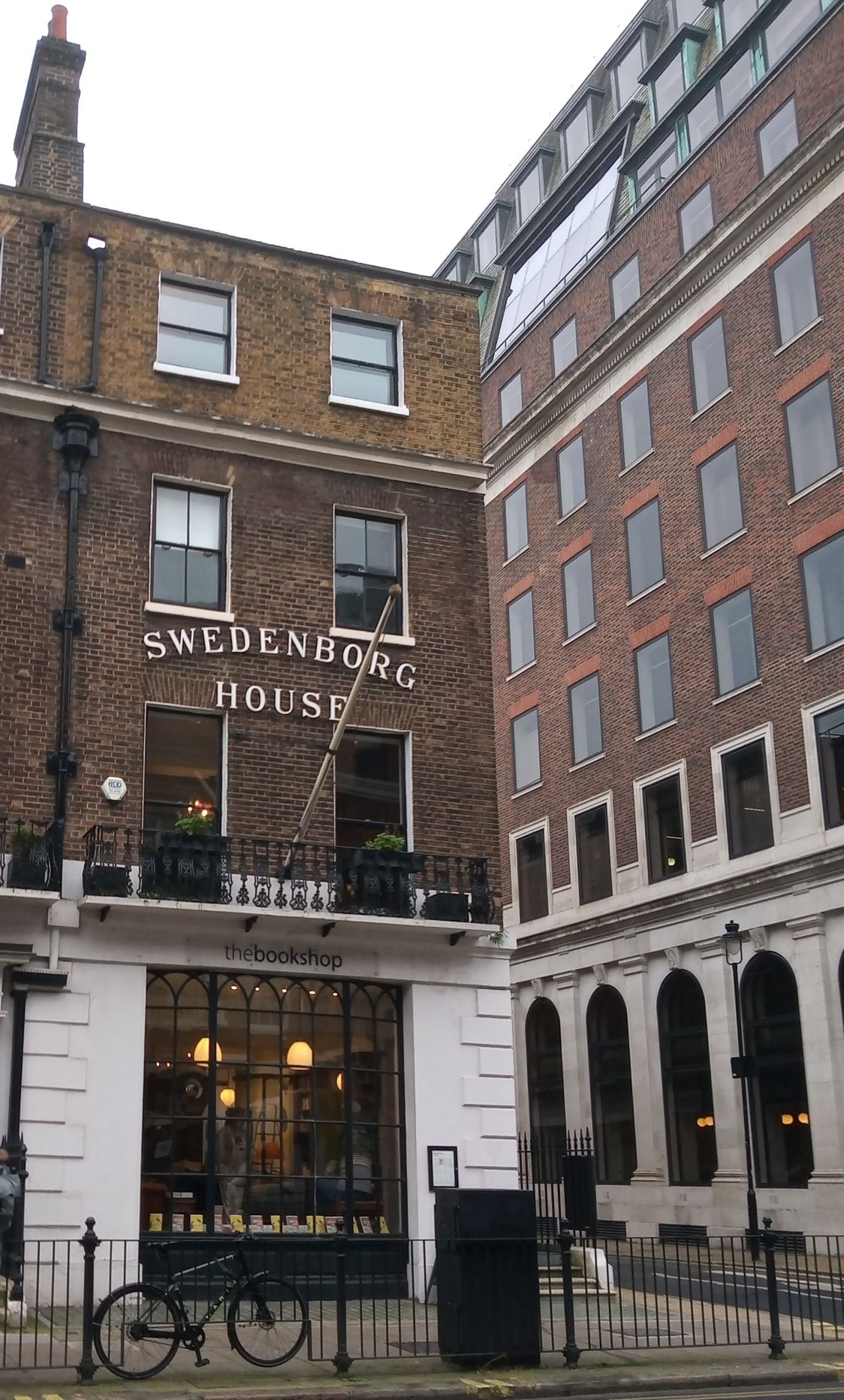
I sometimes hear pagans complain that London doesn't have green spaces. It simply isn't true, which is why I've decided to start a series of posts on my blog specifically about Green London. I thought I'd start with Bloomsbury Square Gardens. It's opposite Swedenborg House, which I visited earlier this week to see a brilliant esoteric exhibition about place and space. 

Although the exhibition was mostly about our perceptions of personal space and the built environment, it got me thinking about this idea that London has few green spaces or none. I suspect it's more to do with the way people think about big cities, and perhaps what people mostly look at, rather than what's actually there. I hope my posts will prompt people to look out for trees, flowers and grass as well as streets and buildings. Even on a cold January day, Bloomsbury Square Gardens had a display of winter blooms and benches where people could sit to unwind, rest and enjoy a little nature.

Bloomsbury Square dates back to the 17th century and was one of the earliest London squares, surrounded by posh houses. The gardens at the centre were first created in 1723 and redesigned at the start of the 19th century. There are other squares with gardens in the area including the larger park in Russell Square where London Pagan Pride often starts. 

As well as Swedenborg House, nearby places with appeal to anyone interested in esoteric London include the British Museum as well as pagan shops Treadwell's, The Atlantis Bookshop, Mysteries, Buddha on a Bicycle and The Astrology Shop. I blogged with the details about these shops and more a couple of years ago. The info in that post hasn't changed greatly. You can find out more about Bloomsbury Square Gardens on its own website, including details of events such as Big Garden Bird Watch, which is on today and over the weekend.

Monday, 2 January 2023

Pagan Eye: Jane's Amazing Rhubarb and New Shoots

My friend and fellow witch Jane Mortimer wanted to share her first Book of Shadows entry of this year, about her amazing rhubarb. She also took the photo above, showing regrowth on 1st January 2023. It's a sign that spring will soon be on the way, even though it's still winter.

The plant that never sleeps ….

I’ve taken this photo on 1st January 2023, and although it’s only a couple of weeks since the snow finished off the last of the big leaves, the rhubarb is sending up new shoots already.  They’re even trying to push through the rotting remains of a leaf on the left of the pic.

It’s long overdue for splitting and re-planting, but my rhubarb never stops giving. Every year I say I’ll pick and eat more, and every year I fail, so I guess it’s putting all it’s strength into next year’s growth.

What signs of new shoots are you noticing at the start of the year?

My Pagan Eye posts show photos that I find interesting - seasonal images, pagan sites, events, or just pretty pictures. If you want to send me a photo for a Pagan Eye post, please email it to badwitch1234@gmail.com Let me know what the photo shows and whether you want your name mentioned or not. For copyright reasons, the photo must be one you have taken yourself.

The photo is copyright Jane Mortimer.

Previous related posts:
http://www.badwitch.co.uk/2020/08/janes-book-of-shadows-edie-librarian.html
http://www.badwitch.co.uk/2020/10/pagan-eye-apple-pie-for-feast-of-pomona.html
http://www.badwitch.co.uk/2022/08/pagan-eye-reynard-junior-young-fox.html
http://www.badwitch.co.uk/2020/09/the-triple-tree-seeing-and-hearing.html

Thursday, 1 September 2022

Review: The Magic of Mushrooms - Fungi in Folklore

This glorious picture is the front cover of a new book, The Magic of Mushrooms - Fungi in Folklore, Superstition and Traditional Medicine by Sandra Lawrence. Written for The Royal Botanic Gardens, Kew, it contains beautiful colour illustrations as well as a wealth of information. The blurb on the back invites you to "immerse yourself in a bewitching world" and discover more about these amazing forms of life that are in some ways more like animals than plants:

"At the centre of countless superstitions, folkloric tales and magical beliefs, as well as appearing in recipes and medicines both traditional and modern, mushrooms have incredible powers.

"Featuring images of over 100 fascinating species, sourced from the archives at the Royal Botanic Gardens, Kew, The Magic of Mushrooms shows that from saving lives to expanding the mind, the potential of these fascinating organisms should not be underestimated."

Fairy rings - circles of mushrooms that appear overnight - are among the most famous bits of fungi folklore. There's a long chapter on them. In Britain and Ireland, tales suggest a human stepping inside such a ring will come to no good at all. Apparently a giant ring of shrooms over 1,000 years old encircles the megaliths of Stonehenge. I wonder if any tourists visiting that ancient site have actually got whisked away to fairyland in that time? 

Hallucinogenic mushrooms naturally get a chapter covering their use in religous rites, shamanic practices and witches' flying ointments among other things. The Cunning Woman's Stillroom is a section with details on herbal cures and magical charms. There are, of course, many dangerous fungi around. History records poisoners employing them and unwary foragers meeting a grim end after eating the wrong kind. Other fungi offer huge benefits, and science is still learning about ways they can help with healing, feeding a growing population and even saving the environment.

The Magic of Mushrooms - Fungi in Folklore, Superstition and Traditional Medicine is a fascinating read and would make a beautiful gift for anyone with an interest in nature and folklore. It's something of a companion book to Witch's Garden, also by Sandra Lawrence, which I'd also thoroughly recommend. 

You can view The Magic of Mushrooms on Amazon. It is published by Wellbeck for Kew. (Please note I earn commission from some links. This helps subsidise my blog at no extra cost to readers.)

Monday, 1 August 2022

Honeysuckle Tea for Lammas, Protection & Psychic Work


This is a cup of tea I brewed for Lammas, the festival of the first fruits of the harvest, using honeysuckle I picked from my garden. I collected a mugful of the flowers, washed them, put them in a teapot, poured on boiling water and left the brew to infuse. The resulting tea was a beautiful golden yellow colour and tasted delicately floral and slightly sweet - just like honeysuckle smells to be honest. It was really nice and refreshing.

Honeysuckle blooms all year round in my garden, but the flowers are particularly abundant at the moment. Magically, honeysuckle is said to promote psychic powers and can be used in spells for abundance, according to Rachel Patterson in her book A Kitchen Witch's World of Magical Plants and Herbs. It would be perfect to drink before doing a manifestation spell or a guided visualisation, such as this one called The Wise Woman's Cottage. According to folklore, if it grows around your home it will protect the property and all inside from ill-wishing. I suspect the scent alone would sweeten up any visitors walking through your garden.

As well as making honeysuckle tea, I'm planning on using the vines to weave baskets. I've not done much basketweaving before, so it will be an experiment. If anyone has any recommendations for books or other tuturials on crafting with honeysuckle, please leave a comment.


Monday, 25 July 2022

In the Heatwave: Seeing the Value of Not Mowing My Lawn

Everyone's aware of the serious environment problems of the current heatwave. However, I'm seeing the value of not having mown my lawn since April. I took part in No Mow May to let the grass grow and wildflowers flourish, then let it grow more in June and early July. The photo above shows what it looks like now, despite very little rain for weeks and the hottest London temperatures since records began.

There are parched patches, but there are still areas of green and long grass offering a bit of shade for animals. It might not look great, but it's a huge contrast to my neighbour's lawn. He's been mowing his grass regularly and it's now completely brown. I've also done very little other gardening this year. I probably should have done more to stop the brambles proliferating, but other wildflowers are attracting butterflies and bees. The picture doesn't show them, but I assure you I have lavender, honeysuckle, hollyhocks and quite a few other things insects like. 

Nevertheless, we could do with an end to the dry weather. Yesterday late afternoon there were a few spots of rain which didn't last long, so I went into my garden to do a little rain magic. Later in the evening it rained some more, although not enough. Weather magic works best when there's a chance of change, so I'll be looking at the forecast to see when rain is most likely and trying a spell to encourage it to fall.

Other previous related posts
http://www.badwitch.co.uk/2022/06/counting-buttercups-in-my-lawn-for.html
http://www.badwitch.co.uk/2022/04/review-practically-pagan-planet.html
http://www.badwitch.co.uk/2021/03/when-to-leave-wildflowers-and-when-to.html
http://www.badwitch.co.uk/2020/07/pagan-eye-bee-on-flowering-lavender.html