Showing posts with label death. Show all posts

Monday, 29 June 2026

Art: Frida Kahlo & Day of the Dead Imagery @ the Tate

I went to the new Frida Kahlo exhibition at London's Tate Modern yesterday and loved it, both as someone who enjoys art and who is interested in folklore and mythology. Day of the Dead imagery is one aspect of Mexican culture that appears both in Frida's paintings and in other artist's work that she inspired. 

The photo at the top shows Altar for Frida Kahlo by Carmen Lomas Garza with other paintings in a room displaying creations in homage. The picture to the right shows one by Frida herself called Girl with Death Mask.

Here's more general information about the exhibition from the Tate website:

"Frida: The Making of an Icon... showcase[s] over 30 of Kahlo’s most iconic works that introduce her ‘many selves’ – the dedicated wife, the intellectual, the modern artist, and the political activist. Alongside treasured garments, jewellery, photographs and memorabilia, there are over 200 works by her contemporaries and the artists she inspired from later generations, celebrating her lasting impact on those who continue to reimagine and reclaim her remarkable story."

Frida: The Making of an Icon  is on at the Tate Modern, Bankside, London SE1 9TG until 3 January 2027. Tickets are £25 or free for nembers. You can find out more here: https://www.tate.org.uk/

Previous Related Posts
https://www.badwitch.co.uk/2025/02/pagan-eye-mike-kelleys-switching-marys.html
https://www.badwitch.co.uk/2025/08/art-tate-britains-ithell-colquhoun.html
https://www.badwitch.co.uk/2026/04/pagan-eye-constables-stonehenge-at-tate.html
https://www.badwitch.co.uk/2024/08/pagan-eye-women-artists-and-moon-goddess.html

Tuesday, 11 March 2025

Rounding the Year: A Daffodil in my Garden

Daffodils seem to be out everywhere after a few days of sunshine. The picture above shows one of many growing in my garden.  They are an iconic flower of March and the weeks around the Spring Equinox. However, seeing them always makes me feel a little sad because this is the time of year that my mum died. 

She loved the daffodils that grew around our house. Shortly before she died I picked a large bunch of them to put in a vase near her bed. Now, the sight of them reminds me of her, and the happy memories are tinged with lingering grief.

Sharing seasonal photos

Inspired by ideas in my book Rounding the Wheel of the Year, I share seasonal pictures, art, crafts, words and customs as well as a record of what's happening in nature. 

Where to Find my Books


If you want to buy Rounding the Wheel of the Year  and any of my other Pagan Portals witchcraft books, or my Gothic novel Erosion  you can find them via my publisher Moon Books, which is part of Collective Ink: https://www.collectiveinkbooks.com

You can also find my books at London bookshop Treadwell's at 33 Store Street, Bloomsbury: https://www.treadwells-london.com/

Tuesday, 29 October 2024

London Necropolis: St Mary Spital Charnel House

Before Samhain - or Halloween - for many years I blogged with photos of London's burial grounds under the title London Necropolis. A Necropolis is a city of the dead. Here's another post in the series: the archeological remains of St Mary Spital Charnel House. 

This is part of London's medieval history and was in the crypt of St Mary Magdalene and St Edmund the Bishop chapel in 1320. It was below a cemetery and was used for storing bones. This was necessary as the cemetery became over-full due, as did many city burial sites.

However, Inspector of Ancient Monuments Jane Siddell believes many of the remains were those of victims of the great famine of the 14th century. People flocked to London from Essex when crops failed, but then died of starvation. This terrible tragedy, and those who suffered, can still be remembered today.

The charnal house was rediscovered in 1999 and is underneath the pavement at Bishops Square, London E1 6FQ. It can be viewed behind glass via steps that lead down below street level. Entry is free. The figures are not human remains, but artistic representations. I took the photo earlier this year. 

You can read more of my London Necropolis posts from previous years in the links below:

http://www.badwitch.co.uk/2019/10/london-necropolis-pagan-anglo-saxon.html
http://www.badwitch.co.uk/2016/10/london-necropolis-tower-hamlets.html
http://www.badwitch.co.uk/2011/10/london-necropolis-highgate-cemetery.html
http://www.badwitch.co.uk/2017/10/london-necropolis-temple-church.html
http://www.badwitch.co.uk/2019/10/london-necropolis-grave-robbing-at-st.html

Tuesday, 23 January 2024

Pagan Eye: Cabinets of Death at Viktor Wynd's Museum


Cabinets of Death is the wonderful title of a new exhibition at Viktor Wynd's Museum of Curiosities in East London. I had a look around when I was there on Sunday before teaching a scrying workshop and took the photo above. The picture shows the entrance to one of the eerie cabaret restaurants fashionable in late 19th century Paris. 

I rather like that my photo shows a spooky reflection in the glass of the display opposite with the words "Cabinets of Death" visible. It's a Pepper's Ghost effect - a trick used in 19th century theatres to give the illusion of spectral things on stage.

More about the exhibition itself: Cabinets of Death: Death Museum and Cocktelarium is co-curated by Bompas and Parr and Joanna Ebenstein and is about the ‘Death Cabarets’ and the rituals and motifs surrounding death. It also celebrates Mel Gordon's new publication Cabarets of Death edited by Joanna Ebenstein and published by Strange Attractor. You can pop in and see it for free as all the exhibits are in the main bar area of The Absinthe Parlour. 

The Viktor Wynd Museum is at 11 Mare Street, London, E8 4RP. You can find out more here: https://www.thelasttuesdaysociety.org/museum/

My Pagan Eye posts show photos that I find interesting - seasonal images, pagan sites, events, or just pretty pictures. If you want to send me a photo for a Pagan Eye post, please email it to badwitch1234@gmail.com Let me know what the photo shows and whether you want your name mentioned or not. For copyright reasons, the photo must be one you've taken yourself.

Other previous related posts
http://www.badwitch.co.uk/2023/10/photos-from-ben-edges-arty-party-at.html
http://www.badwitch.co.uk/2023/11/witchcraft-at-viktor-wynds-museum-of.html
http://www.badwitch.co.uk/2018/01/pagan-eye-museum-of-witchcraft-in-london.html
http://www.badwitch.co.uk/2023/11/pagan-eye-divination-at-bm-myanmar.html
http://www.badwitch.co.uk/2024/01/the-bad-witchs-10-new-year-resolutions.html

Friday, 11 November 2022

Street Art: Poppies on a Wall for Armistice Day

Today, Friday 11 November 2022, is Armistice Day, marking the anniversary of the date the armistice was signed between the Allies and Germany that brought the end of WWI in 1918. In a couple of days is Remembrance Sunday, an annual event acknowledging those who died in WWI, WWII and other wars.

Here I am sharinga photo I took of street art in my local area, showing poppies and someone who seems to be grieving the loss of a loved one. In the background red drops seem to be falling, reminding us of the loss of life in conflicts. 

Some people still choose to wear a red poppy in memory of those who died in war, others prefer a white poppy to focus on peace. Purple poppies honour animals that died in wartime. Black poppies remember the People of Colour who served in wars. There should never be any obligation to wear any kind of poppy, but if you want to wear one and prefer not to buy artificial plastic things, I've blogged in the past about how to knit your own or make one out of upcycled paper.

The mural in the photo is in an alley next to the public library. The SE20 part of London, where I live, is now famous for its large amount of superb street art. You can read an earlier post I wrote it here

Other previous related posts
http://www.badwitch.co.uk/2014/11/remembering-dead-tower-of-london-poppies.html
http://www.badwitch.co.uk/2019/11/pagan-eye-poppy-for-remembrance.html
http://www.badwitch.co.uk/2014/11/remembrance-one-tree-hill-honor-oak-and.html
http://www.badwitch.co.uk/2011/11/11th-minute-11th-hour-11th-day-11th.html

Monday, 3 October 2022

Pagan Eye: Skull & Bones at London Month of the Dead

This skull and bones on a small coffin is one of the works of art on display in the lobby at Kensal Green Cemetery Dissenters' Chapel during London Month of the Dead. I was at Kensal Green at the weekend running workshops on candle magic and poppet making, but also enjoyed looking at the exhibition of art relating to death. The crypt beneath the chapel is also open for exploration by anyone attending events there this month 

Throughout October, London Month of the Dead is a month-long festival of weird and spooky events, many taking place at in Kensal Green Cemetery Dissenters' Chapel or Brompton Cemetery as well as other London burial grounds. There are talks, workshops, guided walks, ghost stories and other entertainment. Tickets for individual events are £12-£25. You can find the full programme here: https://londonmonthofthedead.com/index.html

My Pagan Eye posts show photos that I find interesting - seasonal images, pagan sites, events, or just pretty pictures. If you want to send me a photo for a Pagan Eye post, please email it to badwitch1234@gmail.com Let me know what the photo shows and whether you want your name mentioned or not. For copyright reasons, the photo must be one you have taken yourself. 

Previous related posts
http://www.badwitch.co.uk/2021/10/pagan-eye-candles-on-coffin-in-kensal.html
http://www.badwitch.co.uk/2014/10/london-necropolis-kensal-green-cemetary.html
http://www.badwitch.co.uk/2022/09/pagan-eye-crow-on-dead-tree-in-richmond.html
http://www.badwitch.co.uk/2022/07/pagan-eye-hekate-at-feminine-power.html

Sunday, 2 October 2022

Folklore of Death: Fallen Leaves and a Lucky Escape

Today, October 2nd is Braughing Old Man’s Day. Back in the sixteenth century a resident of the Hertfordshire village, Mathew Wall, had a lucky escape from being buried alive, thanks to fallen autumn leaves. 

He’d been found, supposedly dead, and a procession including his fiancée was following his coffin. One of the pallbearers slipped on leaves and dropped the casket. It fell to the ground with a thump, but the mourners were then shocked to hear banging from inside. 

The jolt had woken Mathew from narcoleptic sleep and saved him from being buried alive. He married his sweetheart and lived another 24 years. In his will he left money that every October 2nd the bells would ring a wedding peal and Fleece Lane, the site of the incident, would be swept clean. The custom continues to this day.

I'll be blogging more about death-related folklore in the weeks before Samhain and Halloween.

Friday, 23 September 2022

An Equinox Tarot Card: Mourning or Seven of Vessels

I drew a card for the world at the Autumn Equinox and it was the Seven of Vessels. It shows a skull with grave goods as offerings - cups, a lamp and a bowl. The card represents mourning in the deck I used, the Wildwood Tarot. 

The meaning given in the book that comes with the set is this:

"This is a time to honour what is dead and mourn for what has gone. Learn the lessons of letting go by offering thanks for cherished memories and being at peace with the past."

In analysing readings where this card appears, the book points out that mourning begins the process of recovery after failure or bereavement. We should allow our emotions to flow with their natural course and recognise that it can take a lot of time after a loss to get a sense of closure and be at peace.

Sometimes we don't realise what was important to us until it is gone.  A lot has happened in the world over the past few years. Many are still mourning personal losses as well as feeling sadness over things that have fallen into history. The Autumn Equinox is the point in the year when the nights start to become longer than the days. We are entering the time of festivals to honour the dead. The message of this card is to allow yourself to mourn if you feel you need to, and to allow others to mourn for as much time as that will take.

In Rider-Waite-Smith style tarot decks, this card corresponds with the Seven of Cups, but the meaning is a bit different from the card I drew. Images show cups filled with possible gifts that the future might hold, some are beneficial, some are harmful, and they are all potentially just illusions. They represent emotional choices we face as we go forward in our lives. The message is to try to see through illusions and to pick wisely.

You can read my review of the Wildwood Tarot here.

Previous related posts
http://www.badwitch.co.uk/2014/09/are-some-tarot-decks-more-genuine-than.html
http://www.badwitch.co.uk/2019/05/the-wildwood-tarot-stag-card-strength.html
http://www.badwitch.co.uk/2021/07/divination-blasted-oak-from-wildwood.html
http://www.badwitch.co.uk/2022/09/a-poem-on-learning-of-death-of-queen.htm

Sunday, 18 September 2022

Love and Floral Tributes for the Queen at Green Park

I visited Green Park yesterday to see the floral tributes for the queen. The route there wound around the outer walls of Buckingham Palace and through the streets of London, past the palace gates and into the park. I joined the three-hour queue from near Hyde Park Corner. As a friend pointed out to me, it was a kind of secular pilgrimage. It felt moving and meaningful - and a very English way to show respects to the woman who ruled this country for longer than the span of my life so far. 

A couple of my friends had queued at the Palace of Westminster, but I'm not so interested in Church of England ceremony or the doings of dignitaries such as politicians who got fast-tracked to see the coffin there. The floral tributes seemed far more a response by ordinary people. As well as flowers there were cards, works of art and other things created by those of all ages and from all walks of life.  

While I was there the sky was blue and the day was warm. Dappled sunlight filtered through the leaves of the London plane trees under which the flowers had been laid. They were beautiful in their colour and variety, and their scent filled the air. Green Park had been transformed into a magical garden dedicated to mourning, but also full of love. There was a sense of shared purpose and community spirit. 

Despite having been on my feet for several hours before arriving at Green Park, I didn't really want to leave or return to the normal world full of the arguments and antagonism that seem to be everywhere in social discourse these days. But, of course, I had to go and make room for others still in the queue to reach the garden and place their offerings.

Royal Parks are officially inviting people to leave floral tributes at Green Park and also Hyde Park. Flowers will eventually be composted and paper items recycled. Although some lovely Teddy bears, toys and other items have been left, these are not encouraged as they aren't so easy to recycle. I do hope the toys - like the one in the photo at the top - get donated to charities for children. You can find out more here: https://www.royalparks.org.uk/ceremonial/floral-tributes-in-the-royal-parks

The pictures on this post are some of those I took at Green Park and in the queue yesterday.

Previous related posts
http://www.badwitch.co.uk/2022/09/a-poem-on-learning-of-death-of-queen.html
http://www.badwitch.co.uk/2022/07/poetry-of-witchcraft-goddess-who-lights.html
http://www.badwitch.co.uk/2016/11/remembrance-sunday-death-of-hero.html
http://www.badwitch.co.uk/2011/07/poem-or-chant-for-healing.html

Friday, 9 September 2022

A Poem on Learning of the Death of the Queen

 Like so many I was shocked and saddened to learn of the death of Queen Elizabeth II yesterday afterrnoon. This morning I wrote a poem:

It was an ordinary day,
wet and grey,
when I heard them say
you died.

So, it all changed
as the world lost
a woman,
someone's mother,
grandmother,
aunt,
friend...

Were you more than that?
Yes.

You were our Queen.
A model for many,
but I doubt we'll see
your like again.

Friday, 1 July 2022

Interview with Soul-Tender and Animist Kelley Harrell

Kelley Harrell runs a soul-tending practice, focussing on deathwalking. She is also the author of several books. I interviewed her about her work, her writing and her changing views on life:

Q: You describe yourself as an animist and deathwalker. Can you explain what that means?

A: As an animist, I hold an awareness that the world is full of human and non-human persons, and I’m in relationship with all of them in some way. How I move among them in my life affects those relationships. I was taught that everything was alive by my grandfather, though I’m sure he’d never heard the word ‘animism.’ It was through him that I understood there were many different relationships overlapping in our backyard, and we had to respect them all. It’s a way of being that’s pretty humbling and sometimes frustrating, because American settler culture isn’t based in awareness of how we affect each other. It doesn’t honor human-Nature connection, so I feel a continual challenge to align what I feel is spiritually appropriate for me, alongside systems that don’t support me in doing that and in some cases actively try to disrupt what I need to do. Animism is also a very inspired path. I’m never alone. I’m always supported, and I always am reminded to give back.

Deathwalking is reconciling the unquiet dead, so that they are functionally moved out of the earthly realm and positioned so that they can move on to whatever is next for them. I realized as a young child that I was being visited by the dead, and as a teenager began searching for ways to respond to them. Deathwalking is a core component of my soul tending work now. It spans everything from clearing trauma from land and structures, to helping terminally ill folx die well, assisting the unquiet dead who are bothersome to the living, and tending Ancestors who didn’t get the opportunity to release their trauma in their lifetimes. I also teach others how to hold that space. Deathwalking is foundational to my path of soul work, and I’m really grateful that it’s part of my life. Even though it scared the crap out of me as a kid.

Q: I understand that you serve your community in North Carolina through a  soul-tending practice. Can you tell me more about that and what it entails?

A: I realized in my early 20s that the trauma I’d experienced as a child wasn’t resolving with conventional methods. Medical, therapeutic, mindfulness practices all had some benefit, but  they didn’t touch the core of where I still felt traumatized. I went to a local woman who was a shaman, and I did several soul healing sessions with her. Six months after that my spirit allies were saying I needed to give that back, that the fundamentals of soul healing were what I was meant to bring in my life. After calling bullshit quite a lot, I committed to learning how I was needed in the arena of soul work. The result almost 30 years later is that I help folx navigate the broken path. For those of us who are not indigenous to a lineage tradition of soul work, we have to find our way back into that ancestral space in a way that is true to who and where we are now, true to our calling, without harming living indigenous traditions. That is a huge focus of my work with others and my own continued education. I help folx live in a more animistic way and cope with the challenges that c and ome with that way of being in a world that rejects Nature. I teach others how to locate soul healing in their own cosmologies and draw it out into their lives in a respectful way. I stand in a lot of difficult spaces to do deathwork. I advocate that we all become good elders so that we die well to be good Ancestors.

Q: You’ve written a book called Teen Spirit Guide to Modern Shamanism and contributed to Shaman Pathways - What is Shamanism?  and iPagan. Can you tell me more about those books and that aspect of your craft? 

A: Well, honestly, my work has changed a lot since those books came out, and I don’t move in my work the same way that I did then. I’ve talked about this a bit in my podcast What in the Wyrd  https://soul-intent-arts.mykajabi.com/podcasts/what-in-the-wyrd-2/episodes/2147743415, specifically regarding Teen Spirit Guide to Modern Shamanism

For the most part, the word ‘shaman’ doesn’t describe what I do, yet it is the word most people understand in the realm of soul work. I never felt at ease with it, but I didn’t have the confidence to take that stand early in my writing, and I didn’t know how to have the conversation around shamanism a different way. And some of that discomfort is noted in those works. Now, I center that discomfort in my writing, and am comfortable engaging in dialogue about soul work in the context that I can speak to, and appreciate just listening when I cannot. 

For the most part those books and essays delve into what it means to live the life of someone who walks between worlds. They are less about how to do what, and more about how you cope with the way that work changes your life. It’s very demanding. It changes how you show up in the world, which can mean a lot of discomfort in relationships and communities. I have long-sought to dispel the romanticization of the shamanic path and to root it into the actual lived experience. Likewise, those works also speak to shamanism less as a healing tool that we bring out when we need it and more as a way of being and moving in the world.

Q: What advice would you offer someone who wanted to learn about shamanism or follow a shamanic-style path?

I would say tread carefully, be really clear why they want to learn it, and what they plan to bring to it. It’s a hard path. It’s easy to just fall in with what Prof. Google has to say about the ins and outs, without taking the time to work with a mentor. It’s a path of reciprocity, and so often folx approach it because they want to learn techniques. Doing so without a plan for how that impacts their life takes a toll. The first thing I have all of my mentees and students do is list their Dream Team. Make a list of their go-to resources for every aspect of support they can think of, and be detailed: medical doctor, acupuncturist, therapist, clergy, nutritionist... It’s very hard to suss out micro details when in crisis, and the phrase ‘shamanic initiation’ isn’t a misnomer.

Also, tread respectfully on behalf of intact cultures. Honor the boundaries of other cultures. Understand the broken path. Honor the boundaries of their Ancestors and spirits of place. Be on pointe with personal cosmology and the rituals required to access it.

Q: You’ve also written extensively on the Runes, including the book Runic Book of Days, and do a podcast. How does that integrate with other aspects of your practice?

As a personal practice, I began working with the Elder Futhark when I was 17. I work with them as a calendar, which situates them in a seasonal progression. This roots them into spirits of place in a way that’s applicable no matter where you live. What that gives me personally is discipline that isn’t inherent in soul work. The runes situate in my lineage and bring in ancestral aspects that have otherwise been difficult to connect with.  

In my practice, I have worked really hard to hold space for their cultural context and make them relevant now. The 80s-90s version of paganism was either academic or experiential. There weren’t models for how it can be both. The runes are a place where I embrace both and encourage others to. I teach the runes in their Old Norse context while applying their animistic relationships to how we live now. In fact, the new series of my podcast What in the Wyrd features working with the runes as verbs. The focus isn’t what we know, but how we’re in relationship with it.

Q: What are you working on now and what are your plans for the future?

I have been working on my next book, Eldering Well, which discusses how the lack of animistic elders in settler culture has created the broken path between humans and Nature. Elders are the wisdom keepers of our animacy. Without them, we have lost magickal traditions, knowledge of sacred rituals, connection to ancestral lands (thus generational spirits of place), living connection to our well Ancestors, and in many ways our understanding of what it means to be the custodians of the planet. This book suggests some of the healing required to create new paths, into Nature, so that we learn to be good elders, and create the way of being that fosters what our Descendants need.

You can find Kelley Harrell on the internet in these places:
www.soulintentarts.com
kelleyharrell.com
instagram.com/kelleysoularts
twitter.com/kelleysoularts
https://www.tiktok.com/@kelleysoularts
https://www.johnhuntpublishing.com/moon-books/authors/s-kelley-harrell

Previous related posts
http://www.badwitch.co.uk/2022/03/interview-jessica-howard-art-of.html
http://www.badwitch.co.uk/2022/03/interview-rachel-patterson-on.html
http://www.badwitch.co.uk/2022/03/interview-laurie-martin-gardner-and.html
http://www.badwitch.co.uk/2022/05/interview-janet-munin-on-polytheistic.html

Thursday, 25 November 2021

Egyptian Ushabti Figurines & Thoughts on Archaeology

Most museums that exhibit items from Ancient Egypt will have little effigies like this on display. They are coffin servants known as ushabtis or shabtis. Ancient Egyptians buried them in tombs to serve the occupant in the afterlife. They are often displayed with things like farming tools, indicating the role they were supposed to play.

I took this photo some time ago when I was at Maidstone Museum for a Terry Pratchett exhibition, but was reminded of it when I was reading the entries for November in the Moon Books community book Every Day Magic:
"November 26. Egyptian Book of the Dead: On this day in 1922, Howard Carter and Lord Carnarvon were the first people for 3,000 years to enter the tomb of Pharaoh Tutankhamun. Look up The Egyptian Book of the Dead online and learn more about Ancient Egyptian funerary rites and afterlife beliefs."
While I think it's good to learn about the funerary customs of those who lived in the past, I also know that excavating people's graves is a controversial subject. I recently engaged in a heated debate in a pagan group about just that. Many pagans these days feel it is wrong to interfere with ancient burial practices, or remove bodies from the place in which they were laid to rest. Others feel that archaeological excavations and scientific examination of both bones and burial sites are the best ways we can learn about our ancestors from the distant past. To be honest, I'm in the latter camp, although I do believe human remains should always be treated with respect.

What are your thoughts on the subject? Please leave a comment.


Thursday, 11 November 2021

Craft: Making Paper Poppies by Upcycling Packaging


Whether you want to wear a poppy for Remembrance Day on November 11, or create a wreath or flower crown for a pagan rite to honour the dead, here's an easy way of making paper poppies. You can do it by upcycling packaging and scrap paper to reduce waste and help the environment.

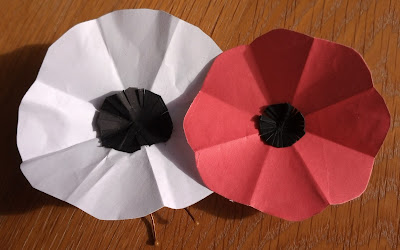
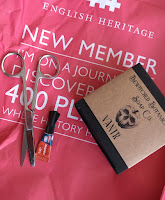
In the picture on the right you can see the English Heritage carrier bag and Bewitched Botanicals soap packaging I repurposed for the red poppy. The white poppy is stuck to an old hairgrip, but you could also use icecream or lolly sticks, or just a small stick from the garden. 

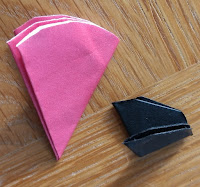
What you do is cut a square of paper of the main colour for the outer poppy and a smaller square of black paper for the centre. Fold each square in half diagonally, then in half diagonally two more times. 

Cut a curve around the edge of the folded paper, as in the photo. Open them up. With scissors, snip around the edge of the black paper so that it looks a bit like the stamens. Stick the black paper to the middle of the paper poppy.

Red artificial poppies are traditionally worn to honour war veterans. Purple poppies remember animals that suffered in wartime. Black poppies remember the People of Colour who served in wars, while white poppies have a focus on peace. Artificial poppies are usually sold by organisations to raise money for charities, but if you make your own you can then donate to a charity of your choice.

Over at the Moon Books Blog, I wrote more about November in the Wheel of the Year. I looked at the themes of sacrifice and remembrance as well as the folklore and magical symbolism of poppies.

Saturday, 2 October 2021

Magic for the Month of October: Halloween & Samhain


Here's a video of the talk I gave on Facebook Live yesterday (Friday) about October customs, Samhain, Halloween, Apple Day, and beliefs about death and rebirth.

Friday, 30 October 2020

Visualisation: A Journey For When the Veil is Thin

Here is a guided visualisation for Samhain, which is a time to think about the spirits of those who have died, and for Halloween, the time of year when we celebrate all things scary.

Guided visualisations can often be thought of as a bit light and fluffy. They sometimes get categorised with general mind, body, spirit practices as forms of meditation with spoken words to help people stay mindful as they journey towards enlightenment. However, in witchcraft, guided visualisations can take us along dark paths to face our fears. I wrote this guided visualisation for the time around Samhain, or Halloween. It is called A Journey for When the Veil is Thin. 

Because it is designed to be potentially scary, read all the text through before doing it, to make sure you want to attempt it as a visualisation. You could also record the words and then listen to them with your eyes fully closed. Before doing the visualisation, make sure you are sitting comfortably and are somewhere safe where you won’t be disturbed.

Close your eyes. Take three deep breaths in and out and relax, then visualise the following:

Imagine you are in an old cottage, in the country. The cottage is sparsely furnished, but comfortable, with armchairs by an open fireplace. It is an October night, and outside your window the sky is dark. The room is warm and lit by the glow from the fire and a candle lantern, which hangs on a hook. You take the lantern and leave the cottage by the front door into the chill and darkness of the night.

Close the cottage door behind you and walk down garden path towards the front gate. As you do so, you notice that the flowers that in the summer bloomed in the garden are mostly dry and brown and dead. Even the late Michaelmas daisies, which flowered at the start of autumn, are dying. This is the natural cycle of the seasons, and summer is dead. 

You leave by the garden gate, into the narrow country lane that runs past this cottage. It is a hollow way. It is an ancient trackway, worn down by thousands of years of feet and wheels until the path was dug deep into the ground. On either side, high banks are topped with hedgerows, speckled with berries, red as blood. Trees grow along the hollow way too, and their branches, bearing autumn leaves, arch overhead, touching each other, so the way is enclosed.  Many people have walked this way before, many more who are now dead, than those who are living. You follow them on this night when the veil is thin. Perhaps you see the shades of their ghosts walking along the path with you. If so, they do not seem to see you. They are but memories held by the earth and stones on which they walked. The only sounds you hear are the rustling of dry leaves in the wind.

You come to a stile, which you must cross, onto a path which leads into a forest of trees. These are losing their leaves. Some branches are bare already. Dry twigs snap as you walk, a sharp contrast to the soft leaf mulch rotting into the ground that softens your footfalls. The scent of it is all around you. It is even darker in among the trees, and only the glow of your lantern illuminates a few steps ahead. You know you must tread carefully.

You follow the path through the woods. It is dense and obscured. You must push through brambles to following it through the wood. 

After a while, you come to the edge of the forest, Beyond it, over fence of wrought iron railings, you see a graveyard. In the middle of that is a small, old chapel. Walk along the outside of the railings, between the wood and the graveyard, until you find the gate.

Go through the gate and follow the path through the graveyard. Look at the headstones as you go. Do you see any names? Do you read any epitaphs? 

You come to the chapel, but it is dark and locked. This is not where you are bound tonight. The path goes around it, and you follow. The graves beyond it are older, more crumbling, covered in lichen and harder to read, sunk deeper into the ground, as though the earth is reclaiming its own. You walk on through the graves, to the other edge of the iron railed boundary around this resting place for old bones, then through another gate to a field beyond. 

You are in an open field now, the edges of which are lost in darkness, although you can just make out the narrow path to follow across it, into that darkness ahead. You follow the path, and as you walk, out of the gloom you see huge stones rising. They are ancient megaliths standing at the entrance to a long barrow, the mouth of which gapes blackly beyond the tall stones.

You approach the long barrow. You realise that the candle in your lantern is burning low and fluttering. It is your choice – do you enter the barrow or turn around and go back the way you came?

Long barrows are places where the ancient ancestors of the land were laid to rest, long, long ago, before the time of written history. Legends talk of spirits and guardians and even gods that might be encountered here. Who knows what you will meet on this night when the veil is thin?

If you choose to, step inside and walk into mouth of the barrow. There is room for you to walk, but still it feels enclosed around you. By flickering lantern light you can see the bare stones of tunnel walls going into it, but not the end. Then, your lantern splutters and goes out. You are in total darkness. It is a place where even starlight does not shine, where there is nothing except you and the darkness. And you do not know whether you are in the world of men any more or the world of the spirits of the ancestors. 

You stay stationary in the darkness for a while. It is hard to tell the passage of time as there is nothing to judge it by. Then, you begin to perceive ahead of you pinpoints of light, like tiny distant stars. Perhaps it is your mind playing tricks with you in the darkness, or perhaps it is something else. They move closer, or get larger, spreading out in the space ahead of you. And in their centre is a shape, a silhouette of a being. The being moves closer, towards you. The lights or stars around them start to turn, to spiral. You watch as this swirling spiral of stars seems to spread out around you, and then the silhouette of the being is right in front of you. What do you do? What unfolds between you and the being? 

Take your time to let this encounter play out to its conclusion.

At last, the encounter comes to an end. The being turns and slowly retreats, returning back into the swirling spiral of stars, which seem to diminish in size, or move away, until you can see the silhouette of the being no more, and the stars are just tiny pinpoints of light. And then they are gone, and you are in darkness. You can sense the floor and walls and ceiling of the long barrow around you. Turn around. You see the mouth of the long barrow, and beyond that a starlit night sky, with all the stars in their normal place. 

You leave the long barrow, walk past the megalithic stones at the entrance and cross the field to the railings at the edge of the churchyard. As you do so, it seems that your vision has become more attuned to the night, and you can see more easily by starlight as you walk back through the graveyard. You go through the gate beyond the chapel and enter the path through the trees. Now the wood does not seem so dark either. You easily follow the path to the stile in the hedge. You cross the stile again, and go into the hollow way. You walk back along the lane, go through your garden gate, up the garden path and through the front door into the warm and comfortable cottage. You close the door, and hang your lantern on its hook. Your journey is complete.

To return to your normal world, shake your fingers and toes, stretch your legs and arms, then open your eyes. 

After you have finished, it is important to ground properly. This can best be done by having something to eat and a non-alcoholic drink, but you can also stamp your feet on the floor a few times to feel its solidity, or grip a solid surface, such as the edge of a table, to feel a physical connection with reality. You might also want to take notes of anything you experienced.

You can view more guided visualisations in my book Pagan Portals - Guided Visualisations.

Previous related posts:

Sunday, 10 November 2019

Pagan Eye: A Poppy for Remembrance


As today is Remembrance Sunday, here is a picture of a poppy painted on a stone at the war graves in Nunhead Cemetery.

Let's remember those who died in times of conflict.

My Pagan Eye posts show photos that I find interesting - seasonal images, pagan sites, events, or just pretty pictures.

If you want to send me a photo for a Pagan Eye post, please email it to badwitch1234@gmail.com Let me know what the photo shows and whether you want your name mentioned or not. For copyright reasons, the photo must be one you have taken yourself.

Links and previous related posts
https://www.britishlegion.org.uk/get-involved/remembrance/remembrance-events/remembrance-sunday
http://www.badwitch.co.uk/2019/10/pagan-eye-gothic-angel-at-nunhead.html
http://www.badwitch.co.uk/2008/11/poppy-day-and-poppy-folklore.html
http://www.badwitch.co.uk/2017/11/pagan-eye-crocheted-poppies-for.html

Thursday, 17 October 2019

London Necropolis: Grave-Robbing at St George's


This is the site in London where a grave-robber first stole a body for medical experiments, back in 1777. Nowadays, it is a quiet, little-known London park, tucked away behind the Foundling Museum, but St George's Gardens still contains the tombs from its former days as a churchyard burial ground.

St George's Gardens is also a stopping point on Minimum Labyrinth's Pantheon of Pancras tour. As well as old graves, it contains a statue of Euterpe, the muse of lyric poetry. In the photo to the right, you can she has a crown of flowers and is regularly honoured there.

The gardens are listed as now being one of London's most tranquil places, in Quiet London: Quiet Corners, by Siobhan Wall. There was, apparently, much controversy about the hallowed graveyard being taken over as a public park, back in 1884. And, while it is a peaceful place to spend time on a sunny afternoon, as the light fades in autumn twilight, it is less easy to be sure that the dead lie so peacefully in their disconnected graves.

You can find St George's Gardens in Bloomsbury, WC1, with entrances in Handel Street and Heathcote Street.

Before Samhain - or Halloween - for several years I've been posting a series of photos of London's burial grounds under the title London Necropolis - a Necropolis being a city of the dead. I've blogged about London's "Magnificent Seven" Victorian cemeteries and about some of the less-well-known ones, including St Pancras Old Church, The Cafe in the Crypt and Bunhill. I'll be blogging about others too.

Links and previous related posts
http://www.friendsofstgeorgesgardens.org.uk/
http://www.badwitch.co.uk/2018/09/pantheon-of-pancras-gods-goddesses-women.html
http://minimumlabyrinth.org/
http://www.badwitch.co.uk/2018/10/london-necropolis-name-your-favourite.html

Thursday, 21 February 2019

‘The Waste Land’ Tarot: The Drowned Phoenician Sailor

I have long loved ‘The Waste Land’ – TS Eliot’s 1922 poem about London as a doomed, ‘unreal’ city, populated by people who are dead, but do not realise it.

Yet one figure is certainly dead already – the drowned sailor who ‘Madame Sostris, famous clairvoyant’ places as the significator in a reading she gives ‘With a wicked pack of cards’. That image fascinates me most. But, before focusing on the drowned sailor, here is the full reading in the poem:
…Here, said she,
Is your card, the drowned Phoenician Sailor,
(Those are pearls that were his eyes. Look!)
Here is Belladonna, the Lady of the Rocks,
The lady of situations.
Here is the man with three staves, and here the Wheel,
And here is the one-eyed merchant, and this card,
Which is blank, is something he carries on his back,
Which I am forbidden to see. I do not find
The Hanged Man. Fear death by water.
Anyone familiar with Tarot will recognise that while some are recognisably traditional cards, others aren’t. Eliot himself noted: ‘I am not familiar with the exact constitution of the Tarot…from which I have obviously departed to suit my own convenience.’ The sailor, as Eliot pointed out, is important because he appears later in the poem:
Phlebas the Phoenician, a fortnight dead,
Forgot the cry of gulls, and the deep sea swell
Was the ‘drowned Phoenician Sailor’ just a made-up card of convenience? From the poem’s description, ‘Those are pearls that were his eyes’, we can imagine it shows bones undergoing ‘a sea-change. Into something rich and strange.’ That’s a quote from The Tempest, which is where Eliot got the line about pearly eyes. It implies metamorphosis.

Some commentators, including Robert Currie and Gertrude Moakley, have suggested the Ten of Swords is the card most similar in meaning. The suit is about conflict, pain and destruction and the ten card represents that at its strongest. In the 1910 Rider Tarot Cards - the deck Eliot probably saw - it shows someone lying dead, run through with swords. Yet, in the distant sky, a new dawn breaks. The worst is over, but it is not the end of the story; likewise, for the sailor’s metamorphosing.

Although a drowned sailor is different from Rider deck artist Pamela Colman Smith’s illustration, the Minor Arcana was earlier depicted with just numbers of cups, swords, pentacles and staves. Many modern decks follow her style, but there’s room for flexibility. I’ve blogged in the past about whether some Tarot decks are more genuine than others – even if Eliot was envisaging a picture different from Smith’s version, that doesn’t mean it wouldn’t be a valid card.

The drowning image could place the sailor in the suit of cups, which relates to the element of water and emotional change. The Five of Cups is about grief following loss. Smith depicted someone mourning three spilt cups, with two full cups unseen behind them. The card shows that while grief is natural and should be allowed its course, to move on we need to recognise what treasures we still have. It is about emotional transformation.

However, along with Betsey B Creekmore, in an essay ‘The Tarot Fortune in The Waste Land’, I think the ‘drowned Phoenician Sailor’ can be seen in Smith’s Major Arcana Death card (pictured left), which is also about transformation and about accepting death as a part of the cycle of life. I’ve blogged more about that here. Smith's main image is a skeleton riding a pale horse but, as Creekmore writes, it shows ‘a dead man lying by an ocean; a ship stylised in the manner in which a Phoenician bark might be rendered.’ (see top detail)

Nowadays, of course, there are many Tarot decks with varying imagery. Some, like The Crystal Tarot, depict Death as a skull undergoing transformation (pictured above). The focus is on death as part of the cycle of life. Things die, their bodies rot, but flowers later bloom from them – an idea used in other parts of ‘The Waste Land’:
‘That corpse you planted last year in your garden,
‘Has it begun to sprout? Will it bloom this year?
Yet ‘The Waste Land’ implies the cycle of life continuing is part of the problem. New flowers blooming ‘out of the dead land’ make us cling to memories and stay rooted in the past. What is needed is spiritual and emotional transformation. Only after we acknowledge the lessons of the long dark night of the soul, when all seems lost, can a new day dawn that will let us move on.

Perhaps that divinatory message, now as much as in 1922, is something Londoners really need to think about…

Note: I earn commission from some links. This helps subsidise my blog at no extra cost to readers.

Friday, 26 October 2018

Deathwalking: Three Encounters with Death

I've had a few encounters with death. Here is an essay I wrote about them for the book Shaman Pathways - Deathwalking: Helping Them Cross the Bridge, which comes out today. The book is a collection of essays by practitioners from a variety of pagan and shamanic traditions. It is edited by Laura Perry and is published by Moon Books.

Three Encounters with Death
By Lucya Starza

When I first met death, it wasn’t what I expected.

I was a young witch then – well, in my 20s – and not very experienced. Even as I approach my 60s, with decades in the Craft, I would say that witches are not generally well trained for deathwalking. Although they should be. We will all encounter death sooner or later.

I was doing a meditation to meet the Goddess from A Witch Alone: Thirteen Moons to Master Natural Magic, Marian Green’s excellent book for would-be witches. The meditation I was doing was one to find out which Goddess I should be working with. I was expecting a lighter being – perhaps Epona or Brigit from Celtic mythology. In my mind’s eye I followed a dark tunnel, not knowing where it would end. I was startled – even shocked – that what I saw when I emerged was a bloody battlefield covered with corpses and rotting heads. The battle had ended, all that was left was death. Above this, in front of me, was a figure, female, like a huge black bird of prey. I’ll call her Death, because although all cultures give her a name, I would not want to restrict her to any one culture. And, yes, of course I was scared, but it faded. Death is not our enemy.
“You are not mine yet,” was all she said to me. I was allowed to leave.

I met her again – or an aspect of her – several years later, as my friend died in my arms.

It was a Friday night in the 1990s and I was out clubbing with a group of friends. This was pretty normal; I was still young enough to rave all night and sleep all day as a regular weekend activity – and the friends I was with were my close clubbing buddies. Not that long after we arrived at the club, one of my friends said he felt unwell and wanted to sit down. I went with him, leaving our other friends dancing. Suddenly – really completely without warning – he collapsed into my arms. I shouted for someone to get help. His heart had stopped, but someone trained in CPR got there fast and someone else called 999.

Everyone was trying to save him and everyone did all they could, but I knew he was leaving. Again, I saw that black bird of prey – smaller than before, but still large. I knew no one else could see the being. I wasn’t sure if it was Death herself or a psychopomp. I wasn’t scared that time – the Black Bird wasn’t frightening. Sombre, serene, the Black Bird quietly waited, hovering above my friend, despite all the noise, the activity of resuscitation, the pumping music and other clubbers who were still dancing and talking without realising what was going on. I saw his spirit rise up out of his body and go towards Her.

“Please give him back,” I pleaded.

I got a sense of implacability, of fixed purpose. No argument was possible.

“I have only come to speed his passing,” said the Black Bird, and they left, my friend’s spirit going with Her, down the long corridor out of the club and onwards. I knew my friend would not be revived, although those trying to do so didn’t seem to realise it. And the ambulance arrived, and all the way to the hospital they tried their best. Then the waiting at the hospital – all his friends, because we had all gone there with him. They told me I was being too pessimistic to say I knew he would not be returning to us. But I knew. I had seen him leave.

Could I have done more? I don’t think so. I know my friend had had a hard life, perhaps he was ready for a better one. He had told me that as a young boy he had been abused by a priest and that he had never really got over that. Music and his close friends were the only things that made him happy. He had died in the place he would have wanted to be, with the people he would have wanted to be with. His death was by natural causes – a blocked artery causing a cardiac arrest – it was swift, he hadn’t suffered.

Of course it was a shock, and I grieved terribly, but I also knew that my friend’s spirit had been guided onwards to the next life by one who knew the way. Many months later I got a message and knew his spirit was in a new place – a much better place – but that’s another story.
Who could really ask more from Death?

Years later, I sat a death vigil for my father. He had gone into hospital for what should have been a routine knee operation, but contracted pneumonia and was in the hospital for a long time. I should probably add that my father was elderly and suffered from dementia. Before his operation, my mother – herself also elderly – had been his main carer, while my husband and I had recently given up our own flat and moved in with my parents to help them both.

With his illness he became even more confused, and out of this confusion refused to co-operate with the physiotherapists who were trying to get him mobile. He began to recover from the pneumonia, but it became apparent that he would never walk again and his dementia was getting worse. He became extremely aggressive – physically lashing out at the nurses and being very argumentative with his family when we visited him. Over the time he was in this state in hospital, we gradually realised that when he came out, we would not be able to care for him at home. Although at that stage, we had no reason to believe he would not come out of hospital alive.

Then, one evening, I visited him on the ward and he seemed a lot better. Lucid and in a good mood. He told me how much he loved me and I told him I loved him too. I had a chance to talk about various things from the past that needed reconciling. In hindsight, I know I should have realised people often have a lucid moment before they die. But I didn’t.

I left feeling happier about his prospects than I had for weeks. But then, in the early hours of the next morning, my family got a call from the hospital saying my father had lost consciousness. His pneumonia had returned. Further tests showed he had also contracted MRSA. They tried to save him, but he did not respond to treatment and did not wake at all. The MRSA was causing his organs to fail and, after several days, we were asked to make a difficult decision as to whether they should continue trying to save him – something that was not likely to succeed but would increase his discomfort – or whether he should be allowed to die in as much comfort as possible. We decided the latter.

The three of us – my mother, my husband and I – sat round-the-clock death vigils for him, staying there in eight-hour to 12-hour shifts on rotation. Days and nights went on like this. It felt as though we were all in some kind of limbo between life and death. A week went by.
I made a decision. I called on that Black Bird. Death, the psychopomp. The name didn’t matter. I knew what She could do.
“Please,” I said. “Please come and speed his passing.”

And she did.

I’ve thought long and hard about the ethics of all the decisions I made during that time. Some were made by the family together after long discussion. That last one was made by me alone. I told my husband, later, afterwards. I never told my mother – and she is now with my father in death. I do not feel good about it, but I do know that if I was to relive that time, I would do the same again.

I know that one day I will die. I’m not afraid – not of death or Death. I’m afraid of pain and suffering, but death is just a transition. Sometimes people linger in pain and suffering – either in their bodies or in spirit – because they are scared of moving on. There is no need to be; it is part of the natural cycle of things. We all die and our bodies rot, like those bodies on the battlefield, but our spirits can move on, and it is best if they do so. When I am dying, I know that I will not want to linger. I will call on that Black Bird and whisper: “Please come to me, I am one of yours now. I am not afraid. Please, speed my passing.”

I started my story by saying that in general witches are not well trained for deathwalking. I strongly believe that. Sure some initiations involve a ritualised encounter with Death, but this isn’t the same thing as actual training in how to help people as they face death, go into death and beyond.

Deathwalking includes counselling the living in preparation for death as well as guiding the spirits of those who have died into the next realm either at the time of death or later if they linger in a way that is not helpful to them. In an untrained way, I dealt with situations that happened when I was present and no one else was around who could even see into the spirit realm. I probably made mistakes – that’s usual when the untrained try anything for the first time without proper guidance – but I did my best. Shamanic practitioners have training in deathwalking as a core part of their learning. Us witches would do well to learn from them.

You can view Deathwalking on Amazon

Links and previous related posts
https://www.johnhuntpublishing.com/moon-books/our-books/shaman-pathways-deathwalking
http://www.badwitch.co.uk/2018/06/london-necropolis-roman-dead-in.html
http://www.badwitch.co.uk/2016/11/remembrance-sunday-death-of-hero.html
http://www.badwitch.co.uk/2016/11/pagan-eye-dolls-of-remembrance.html


Friday, 5 October 2018

London Necropolis: Name Your Favourite Graveyard


Before Samhain - or Halloween - for several years I've been posting a series of photos of London's burial grounds under the title London Necropolis - a Necropolis being a city of the dead. I've blogged about London's "Magnificent Seven" Victorian cemeteries: Nunhead, Highgate, Brompton, West Norwood, Abney Park, Kensal Green Cemetery and Tower Hamlets.

I've also blogged about some of the less-well-known ones, including St Pancras Old Church, The Cafe in the Crypt and Bunhill.

Tonight I am going to be at the Dissenters' Chapel in Kensal Green Cemetery to give a workshop on Candle Magic for London Month of the Dead and I am looking forward to it. I love visiting London's old cemeteries. I enjoy the architecture of the tombs, the peace and quiet, the wildlife there and the sense that I am among my ancestors of place in my home city.

But what do you think? Do you enjoy walking among London's dead in old burial grounds or do you think it is a bit macabre? Do you have a favourite cemetery? If so, which one and why?

If you have a photo of your favourite, you could share it too.